Summary

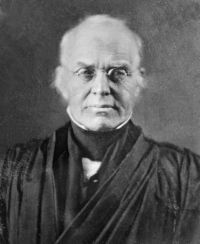
Portrait of Joseph Story Joseph Story Propagation for Gospel in Foreign Parts v…

The acts of Vermont are founded on the supposition that these lands are vacant, and in default of ownership needed the care of the legislature. Even the last act, which grants the lands to the towns in which they lie, for the use of schools, although it mentions them as having been granted to 'the Society for Propagating the Gospel in Foreign Parts,' does not recite, affirm, or admit the fact of the incorporation of such society; much less its capacity to hold lands in perpetual succession.
Source: Wikisource

Portrait of Joseph Story Joseph Story Propagation for Gospel in Foreign Parts v…

The plaintiffs have shown no capacity to recover these lands, or to hold them. They have offered no evidence of a charter of incorporation, constituting them a body politic; or any act of incorporation authorising them to institute this suit. This is essential to the commencement of the suit; and the plaintiffs, for want of such proof of their existence as a corporation, have failed in limine.
The rule of law is, that every person, natural or artificial, who would avail himself of a deed or take any benefit by it, must produce the deed itself.
Source: Wikisource

Portrait of Joseph Story Joseph Story Propagation for Gospel in Foreign Parts v…

The plaintiffs have not, in this particular, any privileges by treaty beyond those of citizens. They take the benefit of the statute remedy to recover their right to the lands; and they must take the remedy with all the statute restrictions.
Upon this last question our opinion is, that it ought to be certified to the circuit court, that under the laws of Vermont the plaintiffs are not entitled to recover any mesne profits; unless so far as they can bring their case within the provisions of the third section of the act of the 15th of November 1820.
Source: Wikisource

Get perspective with Kwize: daily news enlightened by great literature