Summary

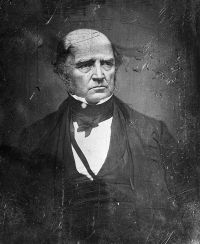
Portrait of Levi Woodbury Levi Woodbury West River Bridge Company v. Dix…

I am even disposed to go further, and say, that if any property of any kind is not so situated as to be either in the direct path for a public highway, or be really needed to build it, the inclination of my mind is, that it cannot be taken against the consent of the owner. Because, though the right of eminent domain exists in some cases, it does not exist in all, nor as to all property, but probably as to such property only as, from its locality and fitness, is necessary to the public use.
Source: Wikisource

Portrait of Levi Woodbury Levi Woodbury West River Bridge Company v. Dix…

And the only ground on which that corporation, private in interest, was entitled in any view originally to condemn land or collect tolls was, that the use of its bridge was public,-was open to all and at rates of fare fixed by the legislature and not by itself, and subject to the revision and reduction of the public authorities.
It may be, and truly is, that individuals and the public are often extensively benefited by private roads, as they are by mills, and manufactories, and private bridges. But such a benefit is not technically nor substantially a public use, unless the public has rights.
Source: Wikisource

Portrait of Levi Woodbury Levi Woodbury West River Bridge Company v. Dix…

So a custom-house is a public use for the general government, and a court-house or jail for a State. But it would be difficult to find precedent or argument to justify taking private property, without consent, to erect them on, though appropriate for the purpose. No necessity seems to exist, which is sufficient to justify so strong a measure. A particular locality as to a few rods in respect to their site is usually of no consequence.; while as to a light-house, or fort, or wharf, or highway between certain termini, it may be very important and imperative.
Source: Wikisource

Get perspective with Kwize: daily news enlightened by great literature