Summary

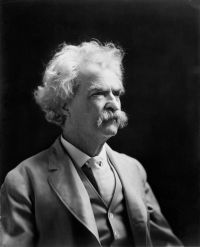
Portrait of Mark Twain Mark Twain 1601: Conversation as it was by the Social Fireside in the Time of the Tudors

Then I think 1601 came out of Mark's instinctive humor, satire and hatred of puritanism. But there is more than this; with all its humor there is a sense of real delight in what may be called obscenity for its own sake. Whitman and the Bible are no more obscene than Nature herself—no more obscene than a manure pile, out of which come roses and cherries. Every word used in 1601 was used by our own rude pioneers as a part of their vocabulary—and no word was ever invented by man with obscene intent, but only as language to express his meaning.
Source: Gutenberg

Portrait of Mark Twain Mark Twain 1601: Conversation as it was by the Social Fireside in the Time of the Tudors

Consider the famous book, 1601, that fireside conversation in the time of Queen Elizabeth: is there any obsolete verbal indecency in the English language that Mark Twain has not painstakingly resurrected and assembled there? He, whose blood was in constant ferment and who could not contain within the narrow bonds that had been set for him the riotous exuberance of his nature, had to have an escape-valve, and he poured through it a fetid stream of meaningless obscenity—the waste of a priceless psychic material!
Source: Gutenberg

Portrait of Mark Twain Mark Twain 1601: Conversation as it was by the Social Fireside in the Time of the Tudors

Mark Twain's irreverence should not be misinterpreted: it was an irreverence which bubbled up from a deep, passionate insight into the well-springs of human nature. In 1601, as in 'The Man That Corrupted Hadleyburg,' and in 'The Mysterious Stranger,' he tore the masks off human beings and left them cringing before the public view. With the deftness of a master surgeon Clemens dealt with human emotions and delighted in exposing human nature in the raw.
Source: Gutenberg

Get perspective with Kwize: daily news enlightened by great literature