Summary

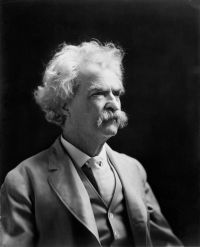
Portrait of Mark Twain Mark Twain Life on the Mississippi, Part 10

Doubtless they chose farming because that life is private and secluded from irruptions of undesirable strangers—like the pilot-house hermitage. And doubtless they also chose it because on a thousand nights of black storm and danger they had noted the twinkling lights of solitary farm-houses, as the boat swung by, and pictured to themselves the serenity and security and coziness of such refuges at such times, and so had by-and-bye come to dream of that retired and peaceful life as the one desirable thing to long for, anticipate, earn, and at last enjoy.
Source: Gutenberg

Portrait of Mark Twain Mark Twain Life on the Mississippi, Part 10

Sugar and Postage
ONE day, on the street, I encountered the man whom, of all men, I most wished to see—Horace Bixby; formerly pilot under me—or rather, over me—now captain of the great steamer 'City of Baton Rouge,' the latest and swiftest addition to the Anchor Line. The same slender figure, the same tight curls, the same springy step, the same alertness, the same decision of eye and answering decision of hand, the same erect military bearing; not an inch gained or lost in girth, not an ounce gained or lost in weight, not a hair turned.
Source: Gutenberg

Portrait of Mark Twain Mark Twain Life on the Mississippi, Part 10

It is his image, in marble, standing on duty at the pilot wheel; and worthy to stand and confront criticism, for it represents a man who in life would have stayed there till he burned to a cinder, if duty required it.
The finest thing we saw on our whole Mississippi trip, we saw as we approached New Orleans in the steam-tug. This was the curving frontage of the crescent city lit up with the white glare of five miles of electric lights.
Source: Gutenberg

Get perspective with Kwize: daily news enlightened by great literature