Summary

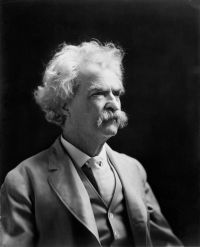
Portrait of Mark Twain Mark Twain The Gilded Age, Part 3

Did thee see anybody whom thee would like to live with always in Fallkill?"
"Not always," replied Ruth with a little laugh. "Mother, I think I wouldn't say 'always' to any one until I have a profession and am as independent as he is. Then my love would be a free act, and not in any way a necessity."
Margaret Bolton smiled at this new-fangled philosophy. "Thee will find that love, Ruth, is a thing thee won't reason about, when it comes, nor make any bargains about. Thee wrote that Philip Sterling was at Fallkill."
Source: Gutenberg

Portrait of Mark Twain Mark Twain The Gilded Age, Part 3

When Ruth returned to Philadelphia, it must be confessed—though it would not have been by her—that a medical career did seem a little less necessary for her than formerly; and coming back in a glow of triumph, as it were, and in the consciousness of the freedom and life in a lively society and in new and sympathetic friendship, she anticipated pleasure in an attempt to break up the stiffness and levelness of the society at home, and infusing into it something of the motion and sparkle which were so agreeable at Fallkill.
Source: Gutenberg

Portrait of Mark Twain Mark Twain The Gilded Age, Part 3

Perhaps Laura was older than Harry. She was, at any rate, at that ripe age when beauty in woman seems more solid than in the budding period of girlhood, and she had come to understand her powers perfectly, and to know exactly how much of the susceptibility and archness of the girl it was profitable to retain. She saw that many women, with the best intentions, make a mistake of carrying too much girlishness into womanhood. Such a woman would have attracted Harry at any time, but only a woman with a cool brain and exquisite art could have made him lose his head in this way
Source: Gutenberg

Get perspective with Kwize: daily news enlightened by great literature