Summary

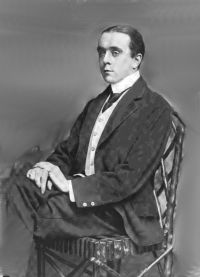
Portrait of Max Beerbohm Max Beerbohm Seven Men — 'Savonarola' Brown (1920)

I like, too, to measure with my eyes the yawning gulf between stage and study. Very different from the message of cold print to our imagination are the messages of flesh and blood across footlights to our eyes and ears. In the warmth and brightness of a crowded theatre ‘Savonarola’ might, for aught one knows, seem perfect. ‘Then why,’ I hear my gentle readers asking, ‘did you thrust the play on US, and not on a theatrical manager?’
That question has a false assumption in it. In the course of the past eight years I have thrust ‘Savonarola’ on any number of theatrical managers.
Source: Wikisource

Portrait of Max Beerbohm Max Beerbohm Seven Men — 'Savonarola' Brown (1920)

And so good-bye to this interior!
[Exeunt Sav. and Luc. Noise, a moment later, of a key grating in a lock, then of gate creaking on its hinges; triumphant laughs of fugitives; loud slamming of gate behind them. In Sav.’s cell the Gaoler starts in his sleep, turns his face to the wall, and snores more than ever deeply. Through open door comes a cloaked figure.]
Cloaked Figure
Sleep on, Savonarola, and awake
Not in this dungeon but in ruby Hell!
[Stabs Gaoler, whose snores cease abruptly. Enter Pope Julius II, with Papal retinue carrying torches. Murderer steps quickly back into shadow.]
Source: Wikisource

Portrait of Max Beerbohm Max Beerbohm Seven Men — 'Savonarola' Brown (1920)

The Piazza is filled from end to end with a vast seething crowd that is drawn entirely from the lower orders. There is a sprinkling of wild-eyed and dishevelled women in it. The men are lantern-jawed, with several days’ growth of beard. Most of them carry rude weapons--staves, bill-hooks, crow-bars, and the like--and are in as excited a condition as the women. Some of them are bare-headed, others affect a kind of Phrygian cap. Cobblers predominate.
Enter Lorenzo de Medici and Cosimo de Medici.
Source: Wikisource

Get perspective with Kwize: daily news enlightened by great literature