Summary

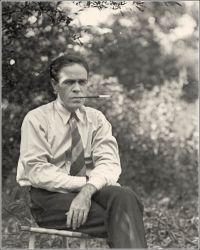
Portrait of Milo Hastings Milo Hastings In the Clutch of the War-God

To this Ethel did not reply, but continued, "And I would look like a man," for among the Japanese people tight-belted waists and flopping skirts had long since been replaced by the kimo, a single-piece garment worn by both sexes and which fitted the entire body with comfortable snugness.
"And is a man so ill-looking?" asked her companion, smiling.
"Why, no, of course not, only he's different. Why, I couldn't wear a kimo—people would see—my limbs," stammered the properly-bred American girl.
"Why, no, they couldn't," replied Madame Oshima. "Not if you keep your kimo on."
Source: Gutenberg

Portrait of Milo Hastings Milo Hastings In the Clutch of the War-God

The United States, long known as the richest country, had also become the most populous nation of the Caucasian world—and wealth and population had made her vain.
But with all her material glory, there was not strength in American sinews, nor endurance in her lungs, nor vigor in the product of her loins. Her people were herded together in great cities, where they slept in gigantic apartment houses, like mud swallows in a sand bank. They overate of artificial food that was made in great factories.
Source: Gutenberg

Portrait of Milo Hastings Milo Hastings In the Clutch of the War-God

That day had been a great day in history; it was the first consequential aerial invasion that the world had ever known. While the arrivals of the morning had been circling in fear-inspiring flights above the neighboring states, the later starters from the Japanese squadron had continued to arrive in the oil regions. Like migrating birds, they settled down over the rich fields and grazing lands of that wonderful strip of flat, black-soiled prairie that stretches westward from the south center of Louisiana until it emerges into the great semi-arid cattle plains of southern Texas.
Source: Gutenberg

Get perspective with Kwize: daily news enlightened by great literature