Summary

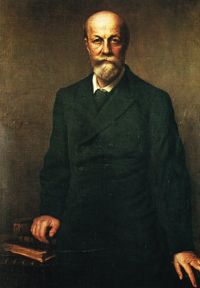
Portrait of Mór Jókai Mór Jókai A Christian But a Roman

Her face looks as innocent as a sleeping babe's. When she speaks you are enchanted; if you should let her go on, she would draw the dagger from your hand, bewitch, ensnare you, melt your heart by her accursed magic arts till you were as cowardly as a scourged slave. She does not paint her face like other women, but her soul; now she is luring you to her by the pretext that she wants to save me and Sophronia, and if you go to her and do not thrust your sword into her heart, ere she can speak one word, she will persuade you to kill us.
Source: Gutenberg

Portrait of Mór Jókai Mór Jókai A Christian But a Roman

Manlius knew that Carinus liked to be called Apollo.
The courtiers were horrified at this bold assertion.
"I repeat that Apollo's face is adorned with freckles. For Apollo's image is the sun, and is not the sun itself full of spots? Is not the sky strewn with stars, and are not the stars the freckles of the sky, as freckles are the stars of the human face? Therefore, O Marcius, do not censure this magnificent taste of mine."
Source: Gutenberg

Portrait of Mór Jókai Mór Jókai A Christian But a Roman

Earth ceased to be a prison; death was no affliction, and the Cæsar was no longer omnipotent.
In the time of Augustus Cæsar a poet said:
"If Rome persecutes thee, whither wilt thou flee? Wherever thou mayst go, thou art everywhere in the power of Rome." The new faith offered every persecuted human being a place of refuge, and Rome vainly conquered all the known world. Another unknown world full of secret joys that increased in proportion was reserved for those who suffered here below, and the darker, the gloomier the shadows here, the more radiant would be the truth there.
Source: Gutenberg

Get perspective with Kwize: daily news enlightened by great literature