Summary

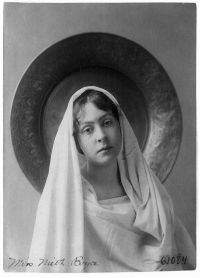
Portrait of Neith Boyce Neith Boyce At the Baths of Lucca

For, go where one will, even into the farthest recesses of the hills, one cannot get away from the civilization of art; there nature, however solitary, is never wild. The mountain tops seem to have been shaped to a purpose, the little gray-brown villages are set so exactly right between the deep green of the chestnut forest and the liquid sky. Their simple forms are interesting and grow ever finer and richer as one descends into the Lucchese plain, reaching a real beauty at Barga and picturesque Ghivezzano of the towers, and culminating in classic Lucca.
Source: Wikisource

Portrait of Neith Boyce Neith Boyce At the Baths of Lucca

Yet in Montaigne's time the baths of Corsena were more fashionable than those of Lucca, and its springs were most poetically named, Savoury, Amorous, Sweet-crowned, the Despairing One. To-day the little place on its hill, hidden away at the head of an unvisited valley, almost never sees a stranger, and is never seen even at a distance, except by those given to exploring.
Source: Wikisource

Portrait of Neith Boyce Neith Boyce At the Baths of Lucca

The charm of those chestnut-wooded slopes of the lower Apennines is celebrated in some pages of Montaigne's "Journal de Voyage"; in some of the best letters of Shelley and Mrs. Browning; and it inspires an amorous episode of Heine's "Reisebilder." Fewer philosophers and poets visit the place to-day; few gouty English, even. The sunset of its prosperity came when, after the cession of the duchy of Lucca to Tuscany, the archducal court made a summer residence at the Baths; built barracks, villas, and roads, and drew crowds.
Source: Wikisource

Get perspective with Kwize: daily news enlightened by great literature