Summary

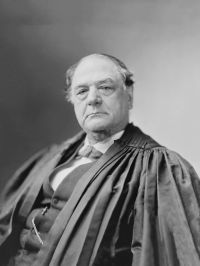
Portrait of Noah Haynes Swayne Noah Haynes Swayne McCarthy v. Mann — Opinion of the Court

Congress is equally powerless to enact with effect, to-day, that a designated person may have a patent of some parcel of land in which none but government has any spark of interest, and that upon the issue to such patent to-morrow the land shall have been the property of the patentee for the four years past. Therefore the statute produced no retroactive results by virtue of its operating upon facts themselves, and changing them from what they really were.
Source: Wikisource

Portrait of Noah Haynes Swayne Noah Haynes Swayne McCarthy v. Mann — Opinion of the Court

At the time of the entry by Poncin, under the act of 1854, Pepin was owner of the covenant of warranty contained in his deed from Poncin, and French was owner of that contained in his deed from Pepin. Neither of such covenants ever became annexed to the land; that is to say, never ran with it; because to run with lands, that is, to pass under bare mention in the deed of the land itself, the covenants must be made by or with persons who are owners of the land, or of some estate therein.
Source: Wikisource

Portrait of Noah Haynes Swayne Noah Haynes Swayne McCarthy v. Mann — Opinion of the Court

As has been before remarked, French was under no obligation as to Elfelt's title in the land. He had not covenanted to protect Elfelt's title, and he had not professed, in his deed to Elfelt, either to have or to transfer any interest whatever in the lands. Now no rule of law is better settled than that subsequently acquired interests are wholly unaffected by deeds of mere release without covenants, or without recitals of estate in the grantor.
Source: Wikisource

Get perspective with Kwize: daily news enlightened by great literature