Summary

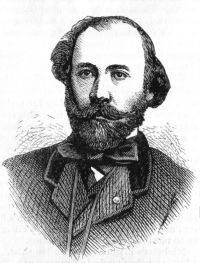
Portrait of Octave Feuillet Octave Feuillet Monsieur de Camors — Complete

It is sometimes a force, and always a grace. But to think that honor is all-sufficient; that in the face of great interests, great passions, great trials in life, it is a support and an infallible defence; that it can enforce the precepts which come from God—in fact that it can replace God—this is a terrible mistake. It exposes one in a fatal moment to the loss of one’s self-esteem, and to fall suddenly and forever into that dismal ocean of bitterness where Camors at that instant was struggling in despair, like a drowning man in the darkness of midnight.
Source: Gutenberg

Portrait of Octave Feuillet Octave Feuillet Monsieur de Camors — Complete

We are speaking, let it be understood, of the best of the elite—of those that read, and of those that dream. As to the rest, those who participate in the Parisian life on its lighter side, in its childish whirl, and the trifling follies it entails, who make rendezvous, waste their time, who dress and are busy day and night doing nothing, who dance frantically in the rays of the Parisian sun, without thought, without passion, without virtue, and even without vice—we must own it is impossible to imagine anything more contemptible.
Source: Gutenberg

Portrait of Octave Feuillet Octave Feuillet Monsieur de Camors — Complete

We love them; and they seem to love us. Thus these two poor women, straying amid these woods, these waters, these solitudes, bearing with them their incurable wounds, fancied they heard voices which pitied them and breathed a healing sympathy. The most cruel trial reserved to Madame de Camors in the life which she had the courage and judgment to adopt, was assuredly the duty of again seeing the Marquise de Campvallon, and preserving with her such relations as might blind the eyes of the General and of the world.
Source: Gutenberg

Get perspective with Kwize: daily news enlightened by great literature