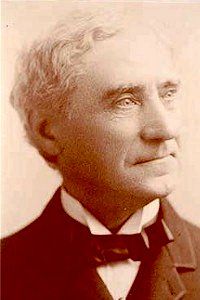
Octavius Brooks Frothingham

Octavius Brooks Frothingham

Summary

Portrait of Octavius Brooks Frothingham Octavius Brooks Frothingham Appletons' Cyclopædia of American Biography (1889)

That Thoreau was a man of aspiration, a pure idealist, reverent, spiritual, is plain from his intimacy with Bronson Alcot and Emerson, the latter of whom spoke these words at his funeral: “His soul was made for the noblest society; he had in a short life exhausted the capabilities of this world; wherever there is knowledge, wherever there is virtue, wherever there is beauty, he will find a home.”
Source: Wikisource

Portrait of Octavius Brooks Frothingham Octavius Brooks Frothingham Appletons' Cyclopædia of American Biography (1900)

The freedom from care, the spontaneousness of labor, the absence of all signs of toil and anxiety, the sense of equality in condition, and the abolition of all class distinctions, made work a delight. There was exhilaration, joy, gayety. The new earth had come. Wealth was nothing, fame was nothing; natural development was all. Mr. Ripley was over, in, and through the whole.
Source: Wikisource

Portrait of Octavius Brooks Frothingham Octavius Brooks Frothingham Appletons' Cyclopædia of American Biography (1900)

He had met, at Brook Farm, which lay close to him at West Roxbury, the finest, most cultivated, most ardent intellects of the day; he had made the acquaintance of delightful people; he had studied and talked a great deal; he had been brought face to face with practical problems of society. He was independent of sectarian bonds, he stood alone, he could bring his forces to bear without fear of wounding souls belonging to the regular Unitarian communion, and he was thoroughly imbued with the modern spirit.
Source: Wikisource

Get perspective with Kwize: daily news enlightened by great literature