Summary

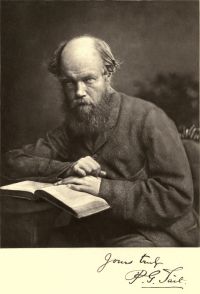
Portrait of Peter Guthrie Tait Peter Guthrie Tait 1911 Encyclopædia Britannica, Volume 15… (1911)

A shroud whose dead-eye is turned in end up will bear a fairer strain, but is more dependent on the seizings; the under turns of the throat are the first to break and the others the first to slip. With the cutter-stay fashion the standing part of the shroud gives way under the nip of the eye. A rope will afford the greatest resistance to strain when secured round large thimbles with a straight end and a sufficient number of flat or racking seizings. To splice shrouds round dead-eyes is objectionable on account of opening the strands and admitting water, thus hastening decay.
Source: Wikisource

Portrait of Peter Guthrie Tait Peter Guthrie Tait 1911 Encyclopædia Britannica, Volume 15… (1911)

Leading-blocks and sheaves in racks are generally smaller than the blocks through which the ropes pass farther away, which appears to be a mistake, as more power is lost by friction. A clump-block should be double the nominal size of the rope. A single strop may be made by joining the ends of a rope of sufficient length to go round the block and thimble by a common short splice, which rests on the crown of the block (the opposite end to the thimble) and is stretched into place by a jigger
Source: Wikisource

Get perspective with Kwize: daily news enlightened by great literature