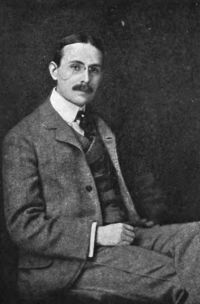
Ralph Henry Barbour

Ralph Henry Barbour

Summary

Portrait of Ralph Henry Barbour Ralph Henry Barbour For the freedom of the seas (1918)

The Gyandotte heeled under its assault until Nelson was flattened against the rail. Its voice was a roar between the funnels and a demoniacal shriek in the rigging. Far above him the wireless aerial whistled shrilly. The wind was a blast from the icy reaches of the Greenland Sea and his clutching fingers inside the wet gloves stiffened and numbed. He was heartily glad that his relief would come soon and that he could tuck himself in his hammock, even though it seemed doubtful that sleep would come to many that night. The little cruiser was taking it hard, and no mistake.
Source: Gutenberg

Portrait of Ralph Henry Barbour Ralph Henry Barbour For the freedom of the seas (1918)

Later two mine sweepers wallowed along under convoy of a diminutive chaser painted with more colors than she had tonnage. Again it was a big Italian freighter, high-sided, rusty-red in spots and squares, ambling along for Bordeaux. But by night the highway was empty and the four ships slid westward into a gentle sea while a soft breeze blew from the south and whispered of Spanish orange groves. Nelson was always glad he experienced the North Atlantic under the conditions he found that day and night, for never again, for as long as he roamed it, was it so kindly and bland.
Source: Gutenberg

Portrait of Ralph Henry Barbour Ralph Henry Barbour For the freedom of the seas (1918)

Toward dusk general quarters was sounded on the Q-4 and the two deck guns were manned and the torpedo crew flew to their stations. For several minutes the supposed enemy submarine lay in plain sight against the sunset glow while the destroyers converged toward it, three and four-inch guns popping. Then they swung around and hurried back in disgust and as the signals wigwagged from ship to ship the officers on the Q-4’s bridge chuckled. The submarine had proved to be a dead whale!
And that was as close to sighting a German U-boat as they came.
Source: Gutenberg

Get perspective with Kwize: daily news enlightened by great literature