Summary

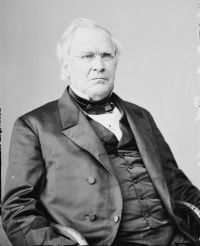
Portrait of Robert Cooper Grier Robert Cooper Grier Stearns v. Page — Opinion of the Court

Charges of fraud are easily made, and lapse of time affords no reason for relaxing the rules of evidence or treating mere suspicion as proof. If a defendant can be compelled to open settled accounts, to explain or prove each item, after a lapse of near thirty years, by general allegations of fraud,-if the fraud can be proved by his inability to elucidate past transactions after so great a length of time, or by showing some slips of recollection, or by contradicting him in some collateral facts by the frail recollection of other witnesses,-no man's property or reputation would be safe.
Source: Wikisource

Portrait of Robert Cooper Grier Robert Cooper Grier Stearns v. Page — Opinion of the Court

A complainant, seeking the aid of a court of chancery under such circumstances, must state in his bill distinctly the particular act of fraud, misrepresentation, or concealment,-must specify how, when, and in what manner, it was perpetrated. The charges must be definite and reasonably certain, capable of proof, and clearly proved. If a mistake is alleged, it must be stated with precision, and made apparent, so that the court may rectify it with a feeling of certainty that they are not committing another, and perhaps greater, mistake.
Source: Wikisource

Portrait of Robert Cooper Grier Robert Cooper Grier Stearns v. Page — Opinion of the Court

And finally, the answer relies on the settlement of accounts thus made more than twenty-five years before the filing of the bill, as a bar to all further account, especially after so great a lapse of time, when papers are lost, witnesses dead, and transactions forgotten, and pleads the statute of limitations.
Statutes of limitation form a part of the legislation of every government, and are necessary to the peace and repose of society.
Source: Wikisource

Get perspective with Kwize: daily news enlightened by great literature