Summary

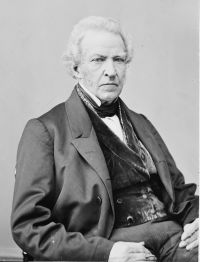
Portrait of James Moore Wayne James Moore Wayne Brown v. Swann (35 U.S. 497) — Opinion of the Court

In other words, it is a bill to discover facts, which cannot be proved, according to the existing forms of procedure at law. The jurisdiction of a court of equity, in this regard, rests upon the inability of the courts of common law to obtain, or to compel such testimony to be given. It has no other foundation: and whenever a discovery of this kind is sought in equity, if it shall appear that the same facts could be obtained by the process of the courts of common law, it is an abuse of the powers of chancery to interfere.
Source: Wikisource

Portrait of James Moore Wayne James Moore Wayne Brown v. Swann (35 U.S. 497) — Opinion of the Court

Unless a statute then, in so many words, or by an inference which does not admit of a doubt, commands the courts of equity in Virginia to give relief from usurious contracts, by evidence aliunde, without requiring the borrower to pay principal and interest; the law should not be so construed. The great principles of equity, securing complete justice, should not be yielded to light inferences, or doubtful construction.
Source: Wikisource

Portrait of James Moore Wayne James Moore Wayne Brown v. Swann (35 U.S. 497) — Opinion of the Court

The courts of common law can neither add to nor take away from the right: nor by any qualification of their judgments, give parties any right to be relieved from them in equity, contrary to its established principles.
We do not think, therefore, the reservation in this instance upon the record a matter of any consequence. The question is, can the complainants have any relief in equity against the judgment. The general rule is, that after a verdict at law a party comes too late with a bill of discovery.
Source: Wikisource

Get perspective with Kwize: daily news enlightened by great literature