Summary

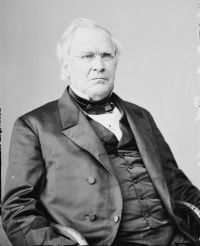
Portrait of Robert Cooper Grier Robert Cooper Grier Thompson v. Roe — Opinion of the Court

The sale of one lot for the taxes due on all those owned by the same person, instead of unnecessarily selling them all, each for its own taxes, is manifestly for the benefit of the owner. But is it manifestly for his benefit that the summary remedy of a distress warrant shall be applied to his household furniture, rather than that a vacant lot lying in commons shall be sold?
Source: Wikisource

Portrait of Robert Cooper Grier Robert Cooper Grier Thompson v. Roe — Opinion of the Court

If he is unable to pay the taxes assessed on his property, it may not be a very desirable measure for him to have his household furniture distrained and sold on ten days' notice, when the remedy against his land cannot be pursued till two years' taxes are due and unpaid; and the owner has then two years more to redeem his land after the sale. A construction of this act, which made it the imperative duty of the collector to distrain the personal property, might be ruinous to the proprietor, and deprive him of an important privilege.
Source: Wikisource

Portrait of Robert Cooper Grier Robert Cooper Grier Thompson v. Roe — Opinion of the Court

Where the owner is out of the jurisdiction of the corporation, the assessment can impose no personal liability on him. But where he resides in the city, he may be considered as personally liable for the taxes assessed against his property, and 'charged to him;' and though not liable to an action of debt, the 12th section of the act provides an additional remedy for the corporation.
Source: Wikisource

Get perspective with Kwize: daily news enlightened by great literature