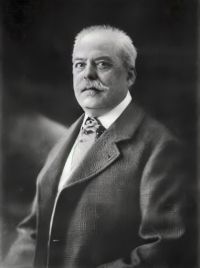
Rodolfo Lanciani

Rodolfo Lanciani

Summary

Portrait of Rodolfo Lanciani Rodolfo Lanciani,  Pagan and Christian Rome (1892)

“ We must not believe that the transformation of Rome from a pagan into a Christian city was a sudden and unexpected event, which took the world by surprise. It was the natural result of the work of three centuries, brought to maturity under Constantine by an inevitable reaction against the violence of Diocletian's rule. It was not a revolution or a conversion in the true sense of these words ”
Source: Wikisource

Portrait of Rodolfo Lanciani Rodolfo Lanciani,  Pagan and Christian Rome (1892)

“ The transformation may be followed stage by stage in both its moral and material aspect. There is not a ruin of ancient Rome that does not bear evidence of the great change. Many institutions and customs still flourishing in our days are of classical origin, and were adopted, or tolerated, because they were not in opposition to Christian principles. Beginning with the material side of the question, the first monument to which I have to refer is the Arch of Constantine, raised in 315 at the foot of the Palatine, where the Via Triumphalis diverges from the Sacra Via. ”
Source: Wikisource

Portrait of Rodolfo Lanciani Rodolfo Lanciani,  Pagan and Christian Rome (1892)

“ In dealing with his pagan subjects Constantine showed so much tact and impartiality as to cast doubts upon the sincerity of his conversion. He has been accused of having accepted from the people of Hispellum (Spello, in Umbria) , the honor of a temple, and from the inhabitants of Roman Africa that of a priesthood for the worship of his own family (sacerdotium Flaviae gentis) . The exculpation is given by Constantine himself in his address of thanks to the Hispellates: "We are pleased and grateful for your determination to raise a temple in honor of our family and of ourselves ”
Source: Wikisource

Get perspective with Kwize: daily news enlightened by great literature