Ostia

Definition and stakes

Frances Mary Peard,  Donna Teresa

“ His tone was still a little stiff, and Teresa, glancing at him, saw that he was looking at Sylvia.
Except for the Tiber—and that can often be as grim as its history—the road to Ostia begins wearyingly. Farther on it grows rapidly in interest, till, when you reach Ostia itself, you think no more about beauty or interest, or your own passing sensations—it is too great. Sad, even in clearest sunshine, with rifled temples, ruined splendour, and the melancholy of its deserted gods, the sombre weight of centuries broods over it.
”
Source: Gutenberg

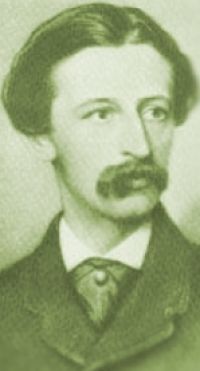
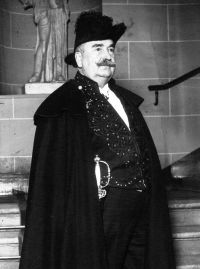
Portrait of Louis Bertrand Louis Bertrand,  Saint Augustin

“ On account of all these reasons, our Africans made a rather long stay at Ostia. They lodged, no doubt, with Christian brethren, hosts of Augustin or Monnica, in a tranquil house far out of earshot of the cosmopolitan crowd which overflowed in the hotels on the quay.
Ostia, situated at the mouth of the Tiber, was both the port and bond-warehouse of Rome. The Government stores-ships landed the African oil and corn there. It was a junction for commerce, the point where immigrants from all parts of the Mediterranean disbarked. To-day there is only left a wretched little village.
”
Source: Gutenberg

Paul Lachlan MacKendrick,  The Mute Stones Speak: The Story of Archaeology in Italy

“ The main north-south street, the cardo, began at the Porta Laurentina on the south—Ostia’s triplicity of gates is an Etruscan heritage—and ran, shaded and porticoed, northwestward to the dazzling whiteness of the colonnaded, marble-enriched Forum. Then it split in two on either side of Hadrian’s Capitolium and passed north between balconied houses to the river. Sixteen per cent of Ostia’s total area, exactly the same proportion as a modern city such as Madison, Wisconsin, was devoted to streets. ”
Source: Gutenberg

Get perspective with Kwize: daily news enlightened by great literature