Summary

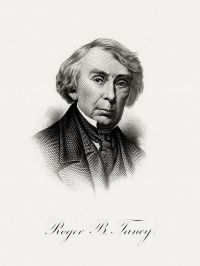
Portrait of Roger B. Taney Roger B. Taney Aldridge v. Williams — Opinion of the Court

It is unnecessary to enlarge upon the doctrines, that the government has only limited powers, and that its fundamental principle is, that sacredness of private property, which is not to be taken without law. The true construction of the act of 1839 must be, that the Secretary of the Treasury is to draw his warrant for whatever amount may be recovered against the collector, and not, that he is vested with discretionary power whether to refund or not.
Source: Wikisource

Portrait of Roger B. Taney Roger B. Taney Aldridge v. Williams — Opinion of the Court

The 7th section of the act of 1832 contains a principle which is as applicable to home as to foreign valuation. It directs the actual value to be appraised by the collector, and provides for duties then or thereafter imposed. Value is what a thing is worth in the market, and the law that provides for ascertaining it by the judgment of appraisers in one place, lays down a principle by which it may be ascertained everywhere.
Source: Wikisource

Portrait of Roger B. Taney Roger B. Taney Aldridge v. Williams — Opinion of the Court

Not the executive, nor the judiciary, but the framers of the law well knew that Congress alone could settle the annually recurring question. What might be economy at one time, might not at another. The act says 'such duties shall be laid, &c.,' using prospective terms. Again, the phrase 'duties required to be paid by law,' implies that the law is to be passed thereafter. So, the phrase, 'shall be assessed, &c., under such regulations as may be prescribed by law.' The object of the law is quite apparent.
Source: Wikisource

Get perspective with Kwize: daily news enlightened by great literature