Summary

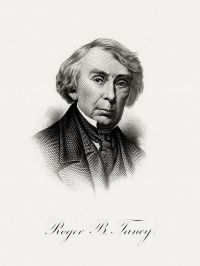
Portrait of Roger B. Taney Roger B. Taney Prigg v. Pennsylvania — Concurrence

Yet no one has ever doubted, that a state may pass laws to enforce the obligation of a contract, and may give to the individual the full benefit of the right so guarantied to him by the constitution, without waiting for legislation on the part of congress. Why may not the same thing be done in relation to the individual right now under consideration?
Again, the constitution of the United States declares, that the citizens of each state shall be entitled to all the privileges and immunities of citizens in the several states.
Source: Wikisource

Portrait of Roger B. Taney Roger B. Taney Prigg v. Pennsylvania — Concurrence

But that law, the power to seize is given to no one but the owner, his agent or attorney. And if the officers of the state are not justified in acting under the state laws, and cannot arrest the fugitive, and detain him in prison, without having first received an authority from the owner; the territory of the state must soon become an open pathway for the fugitives escaping from other states. For they are often in the act of passing through it, by the time that the owner first discovers that they have absconded
Source: Wikisource

Portrait of Roger B. Taney Roger B. Taney Prigg v. Pennsylvania — Concurrence

The fugitive is not always arrested, in order to prevent a dangerous or evil-disposed person from remaining in her territory. He is himself most commonly anxious to escape from it; and it often happens, that he is seized near the borders of the state, when he is endeavoring to leave it, and is brought back and detained, until he can be delivered to his owner. He may sometimes be found travelling peaceably along the public highway, on his road to another state, in company with and under the protection of a white man who is abetting his escape.
Source: Wikisource

Get perspective with Kwize: daily news enlightened by great literature