Summary

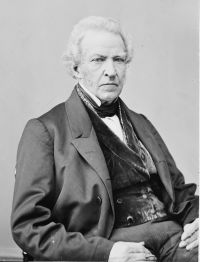
Portrait of James Moore Wayne James Moore Wayne Prigg v. Pennsylvania — Concurrence

Are there no rules of interpretation, founded upon reason and nature, to settle this question, and to secure the rights given by the provision, better than the discretion of the parties to the obligation? Has not experience shown, that those rules must be applied to conventions between nations, in order that justice may be done? All civilized nations have consented to be bound by them; and they are a part of the laws of nations. Is not one of those rules, the maxim, that neither one or the other of the interested or contracting powers has a right to interpret his act or treaty at his pleasure?
Source: Wikisource

Portrait of James Moore Wayne James Moore Wayne Prigg v. Pennsylvania — Concurrence

Besides, the property of an individual is not the less his, because it is in another state than that in which he lives; it continues to be his, and forms a part of the weath of his state. The provision, then, in respect to fugitive slaves, only comprehended within the general rule a species of property not within it before. By doing so, the right of individuals, and that of the states in which slavery was continued, were preserved.
Source: Wikisource

Portrait of James Moore Wayne James Moore Wayne Prigg v. Pennsylvania — Concurrence

Ordinarily, and when rightly understood, it is true, that the abuse of a thing is no argument against its correctness or its use; but that suggestion can only be correctly made, in cases in support of a right or power abstractly and positively right, and which had been abused under the pretence of using it; or where the proper use has been mistaken. In matters of government, however, a power liable to be abused is always a good reason for withholding it. It is the reason why the powers of the United States, under the constitution, are so cautiously given
Source: Wikisource

Get perspective with Kwize: daily news enlightened by great literature