Summary

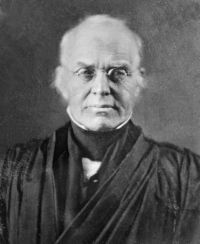
Portrait of Joseph Story Joseph Story Prigg v. Pennsylvania — Opinion of the Court

If this be the true interpretation of the constitution, it must, in a great measure, fail to attain many of its avowed and positive objects, as a security of rights, and a recognition of duties. Such a limited construction of the constitution has never yet been adopted as correct, either in theory or practice. No one has ever supposed, that congress could, constitutionally, by its legislation, exercise powers, or enact laws, beyond the powers delegated to it by the constitution.
Source: Wikisource

Portrait of Joseph Story Joseph Story Prigg v. Pennsylvania — Opinion of the Court

No court of justice can be authorized so to construe any clause of the constitution as to defeat its obvious ends, when another construction, equally accordant with the words and sense thereof, will enforce and protect them.
The clause manifestly contemplates the existence of a positive, unqualified right on the part of the owner of the slave, which no state law or regulation can in any way qualify, regulate, control or restrain. The slave is not to be discharged from service or labor, in consequence of any state law or regulation.
Source: Wikisource

Portrait of Joseph Story Joseph Story Prigg v. Pennsylvania — Opinion of the Court

The rights of the owners of fugitive slaves are in no just sense interfered with, or regulated, by such a course; and in many cases, the operations of this police power, although designed generally for other purposes, for protection, safety and peace of the state, may essentially promote and aid the interests of the owners. But such regulations can never be permitted to interfere with, or to obstruct, the just rights of the owner to reclaim his slave, derived from the constitution of the United States, or with the remedies prescribed by congress to aid and enforce the same.
Source: Wikisource

Get perspective with Kwize: daily news enlightened by great literature