Summary

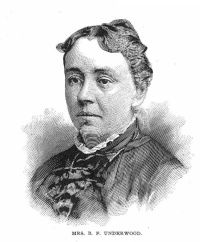
Portrait of Sara A. Underwood Sara A. Underwood Heroines of Freethought — Madame Roland… (1876)

From the letters written by Madame Roland at this time I cannot forbear quoting a few brave sentences:
“If we do not die for liberty, we shall soon have nothing left to do but to weep for her. Do you say we dare no longer speak?—Be it so. We must thunder then!”
“The insolence of the rich and the misery of the people excite my hatred against injustice and oppression, and I no longer ask for anything but the triumph of truth and the success of the Revolution.”
Source: Wikisource

Portrait of Sara A. Underwood Sara A. Underwood Heroines of Freethought — Madame Roland… (1876)

Such was the invocation which Madame Roland addressed to the Deity she worshiped, at a time when, death by violence seeming unavoidable, she contemplated defeating the cruel guillotine by suicide. There is in it, as in all the acts of her life, the undaunted tone of the truly brave in spirit. Conscious of her own nobility of soul, there is in it no mock humility, no cowardly trusting to the blood of an innocent person to save her from the consequences of her own acts, no weak doubts expressed as to her own merit
Source: Wikisource

Portrait of Sara A. Underwood Sara A. Underwood Heroines of Freethought — Madame Roland… (1876)

Pathetic as his "Father, forgive them!" is thy sorrowful "O Liberty, what crimes are committed in thy name!"
The coming woman—our ideal—can never come in nobler guise than that of Madame Roland. Uplifted by the force of her pure moral character even above the sanguinary waves of that "Reign of Terror" — waves which left their defacing stain upon many of the fairest names that flashed meteor-like across that dismal panorama—the worst which even her Christian biographers have found to say of her is, that she was morally brave enough to avow herself a Deist.
Source: Wikisource

Get perspective with Kwize: daily news enlightened by great literature