Summary

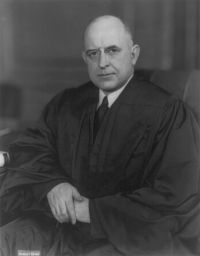
Portrait of Stanley Forman Reed Stanley Forman Reed Foley Bros v. Ilardo — Opinion of the Court

Since we decide that the Eight Hour Law is inapplicable to a contract for the construction of public works in a foreign country over which the United States has no direct legislative control, it is unnecessary to decide whether the law, either directly or via the third party beneficiary contract route, gives an employee who is covered by it a cause of action against his employer for overtime wages.
Source: Wikisource

Portrait of Stanley Forman Reed Stanley Forman Reed Foley Bros v. Ilardo — Opinion of the Court

No distinction is drawn therein between laborers who are aliens and those who are citizens of the United States. Unless we were to read such a distinction into the statute we should be forced to conclude, under respondent's reasoning, that Congress intended to regulate the working hours of a citizen of Iran who chanced to be employed on a public work of the United States in that foreign land. Such a conclusion would be logically inescapable although labor conditions in Iran were known to be wholly dissimilar to those in the United States and wholly beyond the control of this nation.
Source: Wikisource

Portrait of Stanley Forman Reed Stanley Forman Reed Foley Bros v. Ilardo — Opinion of the Court

The payment of statutory overtime to American personnel at contractors' overseas construction sites will be a minor problem in comparison with paying of statutory minimum wages and overtime to native workmen in the face of militant opposition by foreign governments. (It should be noted that among American personnel all laborers and mechanics, skilled and semi-skilled artisans and craftsmen, have always been paid on hourly rates with overtime benefits far exceeding statutory requirements * * *.)
Source: Wikisource

Get perspective with Kwize: daily news enlightened by great literature