Summary

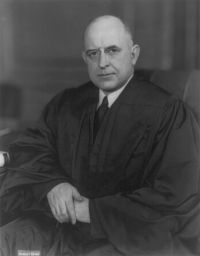
Portrait of Stanley Forman Reed Stanley Forman Reed,  Joseph Burstyn, Inc. v. Wilson…

“ This cannot be said of 'sacrilegious.' If there is one thing that the history of religious conflicts shows, it is that the term 'sacrilegious'-if by that is implied offense to the deep convictions of members of different sects, which is what the Court of Appeals seems to mean so far as it means anything precisely does not gain 'precision from the sense and experience of men'.
The vast apparatus of indices and digests, which mirrors our law, affords no clue to a judicial definition of sacrilege.
”
Source: Wikisource

Portrait of Stanley Forman Reed Stanley Forman Reed,  Joseph Burstyn, Inc. v. Wilson…

“ In light of that history it would seem that the Funk & Wagnalls' definition uses 'sacrilege' in its historically restricted meaning, which was not, and could hardly have been, the basis for condemning 'The Miracle.' If the New York court reads the Funk & Wagnalls' definition in a broader sense, in a sense for which history and experience provide no gloss, it inevitably left the censor free to judge by whatever dogma he deems 'sacred' and to ban whatever motion pictures he may assume would 'profane' religious doctrine widely enough held to arouse protest. ”
Source: Wikisource

Portrait of Stanley Forman Reed Stanley Forman Reed,  Joseph Burstyn, Inc. v. Wilson…

“ Justice Roberts, speaking for the whole Court, said: 'In the realm of religious faith, and in that of political belief, sharp differences arise. In both fields the tenets of one man may seem the rankest error to his neighbor.' Conduct and beliefs dear to one may seem the rankest 'sacrilege' to another. A few examples suffice to show the difficulties facing a conscientious censor or motion picture producer or distributor in determining what the New York statute condemns as sacrilegious. ”
Source: Wikisource

Get perspective with Kwize: daily news enlightened by great literature