“ What can a wife and her children think of an intemperate husband and father? We can be sober in language, and shun cursing and swearing—the most useless, unmeaning, and brutal of vulgarities. Nothing can be so silly and unmeaning—not to say shocking, repulsive, and sinful—as the oaths so common in the mouths of vulgar swearers. They are profanation without purpose—impiety without provocation—blasphemy without excuse. ”
Profanation
Definition and stakes
The theme of “profanation” has been addressed by authors such as Edward Beecher, Samuel Mills Warren, Emanuel Swedenborg, Samuel Smiles and William Dudley Pelley. It is often associated with terms like Sabbath, oath, profanity, God and blasphemy.
Quotes about “profanation”
Richard Baxter, A Christian Directory, Part 1: Christian Ethics
“ Thy customary swearing is an uncharitable accusation of the hearers, as if they were so incredulous, that they would not believe a man without an oath, and so profane, that they delight in the profanation of the name of God ”
 Letitia Elizabeth Landon,
Duty and Inclination
(1838)
Letitia Elizabeth Landon,
Duty and Inclination
(1838)
“ The preaching of Christianity he wisely considered a species of profanation, were he not to illustrate by his own example the sacredness of those precepts he enforced. This world, thought he, is our state of trial and probation—it is to fit and prepare us for another! ”
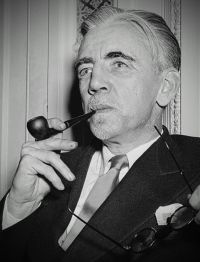 William Dudley Pelley,
The fog
(1921)
William Dudley Pelley,
The fog
(1921)
“ I trained the boy by example and precept to walk uprightly, flee evil, honor and respect his parents, worship God. But he is determined to go his own way, regardless of my counsel. It’s partly the age in which we live that’s to blame. Disrespect and profanation is in the very air the rising generation breathes. ”
Emanuel Swedenborg, Angelic Wisdom about Divine Providence
“ In the widest sense by profanation all impiety is meant, and by profaners, therefore, all the impious who at heart deny God, the holiness of the Word, and consequently the spiritual things of the church which are essentially holy, and who also speak of them impiously. ”
Emanuel Swedenborg, Spiritual Life and the Word of God
“ And this shows why the Gentiles, who are ignorant of the Lord and know nothing about the Word, cannot bring upon themselves such profanation; neither can the Jews, for they deny the Lord from their infancy, and heaven is not opened to them by means of the Word; neither can the impious who have been such from childhood; for, as has been said, those only profane who believe rightly and live rightly, and afterward believe wrongly and live wrongly. Besides this kind of profanation there are other kinds that shall be treated of. ”
Samuel Mills Warren, A Compendium of the Theological Writings of Emanuel Swedenborg (1904)
“ Since by the profanation of what is holy is meant profanation by those who know the truths of faith and the goods of charity from the Word, and also in some manner acknowledge them, and not those who do not know them, nor those who from impiety entirely reject them, therefore what follows is said not of the latter but of the former. ”
Oliver Prescott Hiller, Sermons on the Ten Commandments (1868)
“ But now there is a third kind of profanation, distinct from both the others, and more grievous than either: it is that which is committed by one who believes Divine truth and acknowledges it, and yet lives an evil life in opposition to it. ”
 John H. Stapleton,
Explanation of Catholic Morals
John H. Stapleton,
Explanation of Catholic Morals
“ PROFANITY is not a specific sin. Under this general head come all blasphemy, false, rash, unjust and unnecessary oaths, rash and violated vows, and cursing:—called profanity, because in each case the name of God is profaned, that is to say, is made less holy, by its application to unworthy objects and in unbecoming circumstances; profanity, because it has to do with the Holy Name, and not profanation, which looks to sacred things. ”
 Samuel Taylor Coleridge,
The Literary Remains of Samuel Taylor Coleridge…
Samuel Taylor Coleridge,
The Literary Remains of Samuel Taylor Coleridge…
“ A washerwoman has all her sins blotted out in the twinkling of an eye, and while reeking with suds is received in the family of the Redeemer's kingdom. Surely this is a most abominable profanation of all that is serious, &c. And where pray is the absurdity of this? Has Christ declared any antipathy to washerwomen, or the Holy Ghost to warm suds? Why does not the Barrister try his hand at the "abominable profanation," in a story of a certain woman with an issue of blood who was made free by touching the hem of a garment, without the previous knowledge of the wearer? ”
Samuel Mills Warren, A Compendium of the Theological Writings of Emanuel Swedenborg (1904)
“ The second kind of profanation is by those who understand and acknowledge Divine truths, and yet live contrary to them. But they more lightly profane who only understand; and they more grievously who also acknowledge; for the understanding only teaches, scarcely otherwise than as a preacher, and of itself does not conjoin itself with the will; but acknowledgment conjoins itself, for nothing can be acknowledged but with the consent of the will. But this conjunction is various; and according to the conjunction is the profanation when the life is contrary to the truths which are acknowledged. ”
Samuel Mills Warren, A Compendium of the Theological Writings of Emanuel Swedenborg (1904)
“ They therefore who have profaned truth dwell continually with that which torments them; and this according to the degree of profanation. Because it is so it is most specially provided by the Lord that Divine good and truth shall not be profaned. And it is provided especially by this, that, the man who is of such a character that he cannot but profane is withheld as far as possible from the acknowledgment and belief of truth and good; for, as was said, no one can profane but who has first acknowledged and believed. ”
Emanuel Swedenborg, Spiritual Life and the Word of God
“ In this kind of profanation are all those who are in sacred ministries, and who are seeking by means of the holy things of the church to gain honor and glory, and these and not use, which is the salvation of souls, are what give them joy of heart. ”
Emanuel Swedenborg, Angelic Wisdom about Divine Providence
“ A fourth kind of profanation is committed by those who utter pious and holy things and also counterfeit affections of a love for them in tone and manner, and yet at heart do not believe and love them. ”
 Thomas Adolphus Trollope,
What I Remember, Volume 2
Thomas Adolphus Trollope,
What I Remember, Volume 2
“ The awful reverence for death which would have impelled an Englishman of almost any social position to feel indignation and instantly put a stop to what he would consider a profanation, was absolutely unknown to all those engaged in that perfunctory rite. ”
Samuel Mills Warren, A Compendium of the Theological Writings of Emanuel Swedenborg (1904)
“ For example, if one acknowledges that revenge and hatred, adultery and fornication, fraud and deceit, blasphemy and lying, are sins against God, and yet commits them, he is in this more grievous kind of profanation ”
 Jan Hus,
De Ecclesia. The Church
(1915)
Jan Hus,
De Ecclesia. The Church
(1915)
“ Of profanation I have treated in the tract contra adversarium occultum, [7] showing how every wicked presbyter profanes—that is, violates, curses, and contaminate—God's spiritual temple. For, to follow the saints in their lives is undoubtedly more honorable than all material temples, which will not last after the day of judgment. And woe is me, if I keep silence, not assailing the avarice or the evident luxury of the clergy. For it is said, Dist. 83 [84, 85, Friedberg, 1: 292 sqq.] , an error not resisted is an error approved and the truth, inasmuch as it is defended least, is oppressed. ”
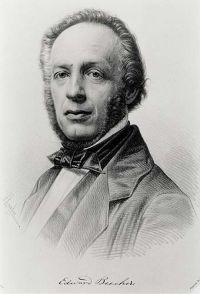 Edward Beecher,
Secret Societies: A Discussion of Their Character and Claims
Edward Beecher,
Secret Societies: A Discussion of Their Character and Claims
“ The profaneness of the titles mentioned above must at once be evident to every reverent, considerate mind. They are such as in the Bible are ascribed only to God and to Christ. Indeed, Masons give more exalted titles to their sham priest than the Scriptures employ to describe the character and office of the great High Priest who is "made higher than the heavens." If this is not profane, we are at a loss to know what can be profane.2. The Odd-fellows in profanation of holy things go about as far as the Masons. ”
 Victor Hugo,
Les Misérables
(1862)
Victor Hugo,
Les Misérables
(1862)
“ it seemed to him that he was accomplishing some religious act, and that he was committing a profanation. ”
Arthur Bird, Looking Forward: A Dream of the United States of the Americas in 1999
“ In the twentieth century men began to acknowledge the absolute folly of the The Cursing Habit. cursing habit. If any excuse could ever be offered in palliation of this vicious habit it might be made in the case of a man whose mind was disturbed by angry passions. In an outburst of passion a slight pretext might be offered for the vigorous use of unwritten Anglo-Saxon. But the twentieth century very properly turned its face against the practice of verbal profanation. ”
 Martin Luther,
Martin Luther's Large Catechism…
Martin Luther,
Martin Luther's Large Catechism…
“ In the first place, then, it is profaned when men preach, teach, and speak in the name of God what is false and misleading, so that His name must serve to adorn and to find a market for falsehood. That is, indeed, the greatest profanation and dishonor of the divine name. Furthermore, also when men, by swearing, cursing, conjuring, etc., grossly abuse the holy name as a cloak for their shame. In the second place also by an openly wicked life and works, when those who are called Christians and the people of God are adulterers, drunkards, misers, envious, and slanderers. ”
 Tertullian,
Ante-Nicene Fathers Vol. III, Apologetic…
(1885)
Tertullian,
Ante-Nicene Fathers Vol. III, Apologetic…
(1885)
“ But the purple, or the other ensigns of dignities and powers, dedicated from the beginning to idolatry engrafted on the dignity and the powers, carry the spot of their own profanation; since, moreover, bordered and striped togas, and broad-barred ones, are put even on idols themselves; and fasces also, and rods, are borne before them; and deservedly, for demons are the magistrates of this world: they bear the fasces and the purples, the ensigns of one college. ”
Reformed Presbytery of North America, The Auchensaugh Renovation of the National Covenant and
“ We have been so far from endeavouring to extirpate profaneness, another evil engaged against in the covenant, and condemned in the Word of God. Deut. xxix. 19; Job xxi. 14; Jer. xxiii. 15; Ezek. xxii. 26; Hos. iv. 1-3; Heb. vii. 15."That profanity hath been much winked at, and profane persons much countenanced, and many times employed, till iniquity and ungodliness have gone over the land as a flood; and profanity, beginning at the court, hath spread itself through every rank and quality in the land: so that immoralities and sins against every precept of both tables are greatly abounding." ”
John A. Clark, Gleanings by the Way
“ What must the heart of that man be made of, who can pass through the midst of such displays of divine beauty, and pollute the very atmosphere as he passes with profanity! This is what hundreds are daily doing. Almost all the hands on board of the steamboats, down even to the little boys, utter an oath almost every other word. Profane swearing is one of the crying sins of this western world. Oaths the most horrid are awfully common among [Pg 78] all sorts of people. ”
T. De Witt Talmage, The Abominations of Modern Society
“ See the effects of this widespread profanity in the increasing perjury. If men in ordinary conversation so commonly use the name of God, is it wonderful that in the jury-box, and in the alderman's office, and in the custom-house so many swear falsely? Notice the way an oath is administered. They toss the Bible at a man, and in the most trivial way say: "So help you God—kiss the book." I suppose enough lies are every day told in the custom-house to sink it. Smuggling, although it be done against positive oath, is in some circles considered a grand joke ”
John Ormsby Miller, Short Studies in Ethics: An Elementary Text-Book for Schools
“ We see, then, that Profanity covers a much wider field than the mere disrespectful use of God's name, with an evil purpose in the mind.The use of profane words is the mark of a coarse and vulgar mind. Many a man has been weaned of the habit which he learnt as a boy solely on account of its coarseness and vulgarity. That is not a very high ground on which to give up a vice; yet it is sufficient to show us that Profanity tends to degrade him who practises it. The man who prides himself on being a gentleman, and yet uses bad language, is by no means altogether a gentleman. ”
Walter H. Tregellas, Cornish Worthies: Sketches of Some Eminent Cornish Men and Families…
“ Is not the crime greater if you pick a pocket at church? and is the additional reason why a man should not have done it, to be the only argument why he should not be punished for doing it? You call profaneness an offence ”
John Bate, Talkers: With Illustrations
“ The common swearer is confined to no rank or age in society. I have heard the youth who was barely in his teens indulge in this sin, as though it had been a part of his parental or day-school education. I have heard the young gentleman, so-called, recently returned from the walks of a University, pollute his lips and character with this shameful vice. I have heard the man who laid claim to wealth, to intelligence, to respectability, and to honour, pour forth his swearing words. ”
Adam Clarke, Commentary and critical notes on the Bible… (1800s)
“ We have excellent laws against all profaneness, but, alas, for our country! they are not enforced; and he who attempts to put the laws in force against profane swearers, Sabbath breakers, etc., is considered a litigious man, and a disturber of the peace of society. ”
 Henry Osborn Taylor,
The Mediaeval Mind
(1911)
Henry Osborn Taylor,
The Mediaeval Mind
(1911)
“ Nevertheless, as between sacred study and profane literature, an even violent divergence of choice existed. Everywhere there were men who loved the profanities in themselves, and some who felt that for their souls' sake they must abjure them. ”
 Jean-Baptiste Massillon,
Sermons
(1879)
Jean-Baptiste Massillon,
Sermons
(1879)
“ Thus, you particularly, my brethren, whom rank and birth exalt above others, be not satisfied with putting a check upon your tongue; according to the advice of the Holy Spirit, present a melancholy and severe countenance, a silence of disapprobation and indignation to every defamatory discourse; for the crime is exactly equal between the malignity of the speaker and the satisfaction of those who listen to him. Let us surround our ears with thorns, that they may not be accesible to poisonous insinuations ”
Dame Shirley, The Shirley Letters from California Mines in 1851-52
“ Use of Profanity—Uncertainty of Mining Rich Bar, East Branch of the North Fork of Feather River, September 30, 1851. I think that I have never spoken to you of the mournful extent to which profanity prevails in California. You know that at home it is considered vulgar for a gentleman to swear; but I am told that here it is absolutely the fashion, and that people who never uttered an oath in their lives while in the "States," now clothe themselves with curses as with a garment. ”
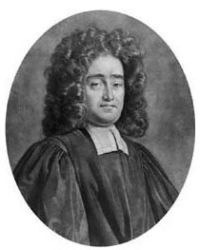 Jeremy Collier,
A Short View of the Immorality…
Jeremy Collier,
A Short View of the Immorality…
“ Swearing looks like the beginning of a Quarrel, to which Women have an aversion: As being neither armed by Nature, nor disciplin'd by Custome for such rough Disputes. A Woman will start at a Soldiers Oath, almost as much as at the Report of his Pistol: And therefore a well Bred Man will no more Swear, than Fight in the Company of Ladies.A Second Branch of the Profaness of the Stage is their Abuse of Religion, and Holy Scripture. And here sometimes they don't stop short of Blasphemy. ”
Julian Sharman, A Cursory History of Swearing
“ No language can be stronger than that of Sir John—“I cannot sufficiently lament,” he says “that shameful, inexcusable and almost universal practice of profane swearing in our streets; a crime so easy to be punished, and so seldom done, that mankind almost forget it to be an offence, and to our dishonour be it spoken, it is almost peculiar to the English nation.” ”
 Mrs. Jameson,
Sacred and legendary art, volume 1…
(1870)
Mrs. Jameson,
Sacred and legendary art, volume 1…
(1870)
“ It is in devotional subjects that we commonly find those anthropomorphic representations of the Divinity which shock devout people; and which no excuse or argument can render endurable to those who see in them only ignorant irreverence, or intentional profaneness. It might be pleaded that the profaneness is not intentional; that emblems and forms are, in the imitative arts, what figures of speech are in language; that only through a figure of speech can any attempt be made to place the idea of Almighty Power before us. ”
Julian Sharman, A Cursory History of Swearing
“ It is not the intention of this essay to follow the history of judicial oath-taking, or of the attestations that would seem to be demanded by [Pg 37] conscience or religion. But it must be remembered that the subject of vituperative swearing is so interwoven with that of these legal and religious ordinances, that the consideration of them must be frequently forced upon us. But whilst doing so it should be no less borne in mind that we are never really losing sight of the object we have in view. ”
 Alfred Plummer,
The Expositor's Bible: The General Epistles of St…
Alfred Plummer,
The Expositor's Bible: The General Epistles of St…
“ But the moral teaching of Jesus impressed many of those who rejected His claims to be the Messiah, and it is this element which St. James remembers.Before concluding, let us return to the moral precept contained in the verse which we have been considering: "Above all things, my brethren, swear not." The prohibition has not ceased to be necessary, as our daily {314} experience proves. The vice of profane swearing (and all swearing about ordinary matters is profane) is a strange one. Where is the pleasure of it? Where, before it becomes a fashion or a habit, is the temptation to it? ”
