Summary

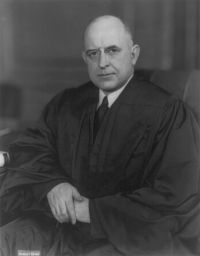
Portrait of Stanley Forman Reed Stanley Forman Reed Southern Pacific Company v. United States…

Thus, as modified, the Act of 1866 requires plaintiff to furnish government transportation between points on and wholly via the land-grant railroad for one-half the charges applicable to like service for private parties. And for government transportation between a point on the aided railroad and one on another line there is deducted from charges generally made one-half the percentage that aided mileage attributable to that service is of the total miles hauled.
Source: Wikisource

Portrait of Stanley Forman Reed Stanley Forman Reed Southern Pacific Company v. United States…

So far as terminal-to-terminal transportation is concerned, the Cascade Route does not function as a new line or an addition. It is simply another way carrying goods by the same railroad between San Francisco and Portland. By which route the shipment moves, is immaterial on the question of deduction for land grants. The conclusion that the lowest public tariffs are to have land-grant deductions based upon the proportion of the land-grant mileage in the original line, seems consonant with the purpose of the acts.
Source: Wikisource

Portrait of Stanley Forman Reed Stanley Forman Reed Southern Pacific Company v. United States…

Thus in 1888 in a ruling as to transportation services rendered by the Central Pacific Railroad, where the Central had three lines from Sacramento to San Francisco, with varying bond-aided mileages, the Comptroller of the Treasury ruled, when the road sought to render statements for the line actually used, that all United States accounts should be stated in terms of the bond-aided mileage of the original route.
Source: Wikisource

Get perspective with Kwize: daily news enlightened by great literature