Summary

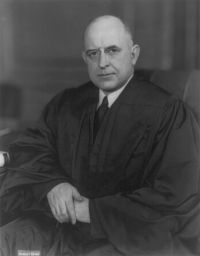
Portrait of Stanley Forman Reed Stanley Forman Reed United States v. Congress of Industrial Organizations…

If the newspaper is prepared and distributed and circulated by means of the expenditure of union funds, then how could a line be drawn between that and political literature or pamphlets or publications of that nature? It is perfectly easy for a labor union to publish lawfully a bona fide newspaper and to charge subscriptions for that newspaper, either by itself or as a corporation.
Source: Wikisource

Portrait of Stanley Forman Reed Stanley Forman Reed United States v. Congress of Industrial Organizations…

Members of unions paying dues and stockholders of corporations know of the practice of their respective organizations in regularly publishing periodicals. It would require explicit words in an act to convince us that Congress intended to bar a trade journal, a house organ or a newspaper, published by a corporation, from expressing views on candidates or political proposals in the regular course of its publication.
Source: Wikisource

Portrait of Stanley Forman Reed Stanley Forman Reed United States v. Congress of Industrial Organizations…

The union can issue a newspaper, and can charge the members for the newspaper, that is, the members who buy copies of the newspaper, and the union can put such matters in the newspaper if it wants to. The union can separate the payment of dues from the payment for a newspaper if its members are willing to do so, that is, if the members are willing to subscribe to that kind of a newspaper.
Source: Wikisource

Get perspective with Kwize: daily news enlightened by great literature