Summary

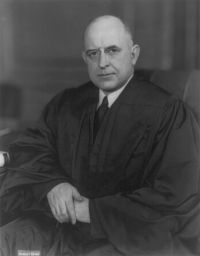
Portrait of Stanley Forman Reed Stanley Forman Reed United States v. Fullard-Leo — Opinion of the Court

We are therefore of the opinion that where, as here, there was power in the King or the officials of the Kingdom of Hawaii to convey a title to Palmyra [18] during the years immediately following its annexation to the Kingdom of Hawaii and prior to many of the private conveyances hereinafter referred to, the doctrine of a lost grant may be applied, in suitable circumstances, and its existence presumed in favor of the predecessors in title of these respondents. In order for the doctrine of a lost grant to be applicable, the possession must be under a claim of right, actual, open and exclusive.
Source: Wikisource

Portrait of Stanley Forman Reed Stanley Forman Reed United States v. Fullard-Leo — Opinion of the Court

It is hard to conceive of a more isolated piece of land than Palmyra, one of which possession need by less continuous to form the basis of a claim. This tiny atoll in the Pacific, however, far removed from any other lands and claimed by no sovereignty until 1862 was not wholly valueless, commercially, prior to the establishment of air-ways over the ocean.
From time to time, men thought there might be something gained from its exploitation.
Source: Wikisource

Portrait of Stanley Forman Reed Stanley Forman Reed United States v. Fullard-Leo — Opinion of the Court

A claim for government lands stands upon no different principle in theory so long as authority exists in government officials to execute the patent, grant or conveyance. As a practical matter it requires a higher degree of proof because of the difficulty for a state to protect its lands from use by those without right. We turn then to the circumstances relied upon by the lower courts as sustaining respondents' contentions in respect to their claim to and occupation of Palmyra.
Source: Wikisource

Get perspective with Kwize: daily news enlightened by great literature