Summary

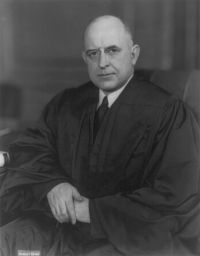
Portrait of Stanley Forman Reed Stanley Forman Reed United States v. New Wrinkle — Opinion of the Court

The United States charges the use of patent licenses as an essential part of the plan to restrain trade, a trade in enamels, varnishes and paints that is alleged to be and obviously is interstate in character. It charges that the price control is an essential part of that restraint.
We think it beyond question that this making of license contracts for the purpose of regulating distribution and fixing prices of commodities in interstate commerce is subject to the Sherman Act, even though the isolated act of contracting for the licenses is wholly within a single state.
Source: Wikisource

Portrait of Stanley Forman Reed Stanley Forman Reed United States v. New Wrinkle — Opinion of the Court

New Wrinkle is not a manufacturer of the commodities covered by its patents. It is solely a holder or owner of the patents, granting the right of making and vending to others. Kay & Ess does manufacture under the New Wrinkle license. New Wrinkle urges that its abstention from manufacturing activities and concentration on patent licensing insulates its activity from the prohibitions of § 1 of the Sherman Act.
Source: Wikisource

Portrait of Stanley Forman Reed Stanley Forman Reed United States v. New Wrinkle — Opinion of the Court

In discussing the General Electric case, the Court was unanimous in saying that it 'gives no support for a patentee, acting in concert with all members of an industry, to issue substantially identical licenses to all members of the industry under the terms of which the industry is completely regimented, the production of competitive unpatented products suppressed, a class of distributors squeezed out, and prices on unpatented products stabilized.
Source: Wikisource

Get perspective with Kwize: daily news enlightened by great literature