Summary

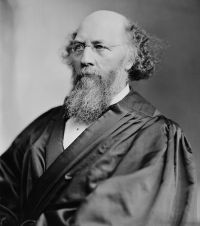
Portrait of Stephen Johnson Field Stephen Johnson Field Chicago St. Railway Company v. Ross…

We have never known parties more willing to subject themselves to dangers of life or limb because, if losing the one, or suffering in the other, damages could be recovered by their representatives or themselves for the loss or injury. The dread of personal injury has always proved sufficient to bring into exercise the vigilance and activity of the servant. But, however this may be, it is indispensable to the employer's exemption from liability to his servant for the consequences of risks thus incurred that he should himself be free from negligence.
Source: Wikisource

Portrait of Stephen Johnson Field Stephen Johnson Field Chicago St. Railway Company v. Ross…

There is, in our judgment, a clear distinction to be made in their relation to their common principal between servants of a corporation exercising no supervision over others engaged with them in the same employment and agents of the corporation, clothed with the control and management of a distinct department, in which their duty is entirely that of direction and superintendence. A conductor having the entire control and management of a railway train occupies a very different position from the brakemen, the porters, and other subordinates employed.
Source: Wikisource

Portrait of Stephen Johnson Field Stephen Johnson Field Chicago St. Railway Company v. Ross…

The collision having been caused by the gross negligence of the conductors, the question arises whether the company is responsible to the plaintiff for the injuries which that collision inflicted upon him. The general liability of a railroad company for injuries caused by the negligence of its servants to passengers and others not in its service is conceded. It covers all injuries to which they do not contribute. But where injuries befall a servant in its employ, a different principle applies.
Source: Wikisource

Get perspective with Kwize: daily news enlightened by great literature