Summary

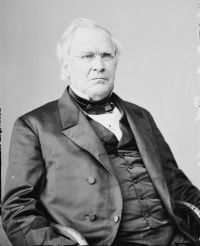
Portrait of Robert Cooper Grier Robert Cooper Grier Philadelphia and Reading Railroad Company v…

Nothing but the most stringent enforcement of discipline, and the most exact and perfect obedience to every rule and order emanating from a superior, can insure safety to life and property. The intrusting such a powerful and dangerous engine as a locomotive, to one who will not submit to control, and render implicit obedience to orders, is itself an act of negligence, the causa causans of the mischief; while the proximate cause, or the ipsa negligentia which produces it, may truly be said, in most cases, to be the disobedience of orders by the servant so intrusted.
Source: Wikisource

Portrait of Robert Cooper Grier Robert Cooper Grier Philadelphia and Reading Railroad Company v…

If one be lawfully on the street or highway, and another's servant carelessly drives a stage or carriage against him, and injures his property or person, it is no answer to an action against the master for such injury, either, that the plaintiff was riding for pleasure, or that he was a stockholder in the road, or that he had not paid his toll, or that he was the guest of the defendant, or riding in a carriage borrowed from him, or that the defendant was the friend, benefactor, or brother of the plaintiff.
Source: Wikisource

Portrait of Robert Cooper Grier Robert Cooper Grier Philadelphia and Reading Railroad Company v…

The defendant in error might perhaps have been entitled to ask the benefit of a rule less rigid in its bearing upon himself; but as the conduct of the railroad company in discharging Jones, the conductor, showed their own estimate of the grossness of the negligence in question, the defendant in error was content to ask the ruling of the point in its milder form, and the finding of the jury established the grossness of the negligence.
Source: Wikisource

Get perspective with Kwize: daily news enlightened by great literature