Summary

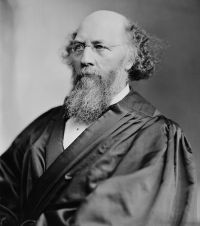
Portrait of Stephen Johnson Field Stephen Johnson Field In re Bonner — Opinion of the Court

The judges of all courts of record are magistrates, and their object should be, not to turn loose upon society persons who have been justly convicted of criminal offenses, but, where the punishment imposed, in the mode, extent, or place of its execution, has exceeded the law, to have it corrected by calling the attention of the court to such excess. We do not perceive any departure from principle, or any denial of the petitioner's right, in adopting such a course. He complains of the unlawfulness of his place of imprisonment.
Source: Wikisource

Portrait of Stephen Johnson Field Stephen Johnson Field In re Bonner — Opinion of the Court

The proposition put forward by counsel, that, if the court has authority to inflict the punishment prescribed, its action is not void, though it pursues any form or mode which may commend itself to its discretion, is certainly not to be tolerated. Imprisonment might be accompanied with inconceivable misery and mental suffering, by its solitary character, or other attending circumstances. Death might be inflicted by torture or by starvation, or by drawing and quartering.
Source: Wikisource

Portrait of Stephen Johnson Field Stephen Johnson Field In re Bonner — Opinion of the Court

If the court is authorized to impose imprisonment, and it exceeds the time prescribed by law, the judgment is void for the excess. If the law prescribes a place of imprisonment, the court cannot direct a different place; not authorized. It cannot direct imprisonment in a penitentiary, when the law assigns that institution for imprisonment under judgments of a different character. If the case be a capital one, and the punishment be death, it must be inflicted in the form prescribed by law. Although life is to be extinguished, it cannot be by any other mode.
Source: Wikisource

Get perspective with Kwize: daily news enlightened by great literature