Summary

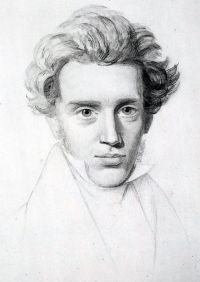
Portrait of Søren Kierkegaard Søren Kierkegaard Selections from the writings of Kierkegaard… (1843)

His wish was, to have been present at the moment when Abraham lifted up his eyes and saw Mount Moriah afar off; to have been present at the moment when he left his asses behind and wended his way up to the mountain alone with Isaac. For the mind of this man was busy, not with the delicate conceits of the imagination, but rather with his shuddering thought.
The man we speak of was no thinker, he felt no desire to go beyond his faith: it seemed to him the most glorious fate to be remembered as the Father of Faith, and a most enviable lot to be possessed of that faith, even if no one knew it.
Source: Wikisource

Portrait of Søren Kierkegaard Søren Kierkegaard Selections from the writings of Kierkegaard… (1843)

The poet is the genius of memory, and does nothing but recall what has been done, can do nothing but admire what has been done. He adds nothing of his own, but he is jeal- ous of what has been entrusted to him. He obeys the choice of his own heart; but once he has found what he has been seeking, he visits every man's door with his song and with his speech, so that all may admire the hero as he does, and be proud of the hero as he is.
Source: Wikisource

Portrait of Søren Kierkegaard Søren Kierkegaard Selections from the writings of Kierkegaard… (1843)

Now all was lost — the trusting hope of seventy years, the brief joy at the fulfilment of his hopes. Who, then, is he that snatches away the old man's staff, who that demands that he himself shall break it in two? Who is he that renders disconsolate the grey hair of old age, who is he that demands that he himself shall do it? Is there no pity for the venerable old man, and none for the innocent child? And yet was Abraham God's chosen one, and yet was it the Lord that tempted him.
Source: Wikisource

Get perspective with Kwize: daily news enlightened by great literature