“ His breathing sounds muffled, he ejects his breath in a blast in order to be able to empty his lungs quickly—and to draw in the delicate, acrid, distant, and yet disguised odour of the mice. What emotions must surge through the breast of the little animal down there when it hears this hollow and muffled snorting? Well, that is its own affair, or perhaps God’s affair, who has decreed that Bashan shall be the enemy and persecutor of these earth-mice. And then—is not fear only an intensified feeling for life? If no Bashan existed the little mouse would very likely be bored to death. ”
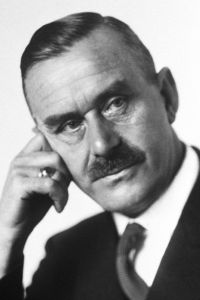
Thomas Mann
Summary
"Bashan and I," a reflective work by Thomas Mann, intertwines natural imagery and existential reflections through the narrator’s relationship with his dog Bashan and encounters with animals such as Lux and Anastasia. Themes of hunting, pursuit, and the dynamic between human and animal instincts take center stage, set against vivid depictions of gravel paths, willows, and gulls.
The text explores the tension between survival and self-examination, portraying nature as both a setting and a reflection of deeper existential concerns. Mann’s prose blends the wild’s unpredictability with the narrator’s search for harmony between life’s impermanence and its significance.
Quotes from Bashan and I (Thomas Mann)
“ But I also love to lean upon the rail of a bridge that crosses a brook, and remain fixed to it as with thongs, losing myself in the vision of the flowing, streaming and whirling element—quite immune to the fear or impatience with which I ought to be filled in view of that other streaming and flowing that goes on about me—the swift, fluid flight of time. Such love of the water, and all that water means, renders the tight little territory which I inhabit the more important and precious to me in that it is surrounded on both sides by water.The local brook is of the simple and faithful species. ”
“ I am thus able to fancy myself strolling upon a real strand down there, inscrutably drawing my foot along the perilous edge of the salt flood. There is no lack of surgings, even if there is of surges, nor of the clamour of gulls, nor of that kind of space-annihilating monotony which lulls one into a sort of narcotic absentmindedness. The level cataracts are rushing and roaring all around, and halfway to the ferryman’s house—the voice of a waterfall joins the chorus—from over yonder where the canal, debouching at a slant, pours itself into a river. ”
