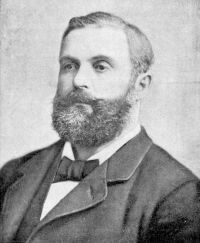
Thomas Wallace Knox

Thomas Wallace Knox

Summary

Portrait of Thomas Wallace Knox Thomas Wallace Knox The Boy Travellers in the Russian Empire (1887)

You see the hut of a peasant side by side with the palace of a nobleman; a stable rises close against a church and there is a carpenter's shop, with its half-dozen workmen, abutting close against an immense factory where hundreds of hands are employed. Moscow is a city of contrasts; princes and beggars almost jostle each other in the streets; the houses of rich and poor are in juxtapostion, and it is only a few short steps from the palace of the Kremlin, with its treasures of gold and jewels, to the abodes of most abject poverty.
Source: Wikisource

Portrait of Thomas Wallace Knox Thomas Wallace Knox The Boy Travellers in the Russian Empire (1887)

Laid desolate by many wars and subjected to despotic rule, the country around Warsaw bears little evidence of prosperity. Many houses are without tenants, and many farms are either half tilled or wholly without cultivation. The spirit of revolution springs eternal in the Polish breast, and the spirit of suppression must be equally enduring in the breast of the Russian. It is only by the severest measures that the Russians can maintain their control of Poland.
Source: Wikisource

Portrait of Thomas Wallace Knox Thomas Wallace Knox The Boy Travellers in the Russian Empire (1887)

The Imperial crown of Russia is the most interesting crown we have anywhere seen. The guide told us how much it was worth in money, but I've forgotten, the figures being so large that my head wouldn't contain them. There are rubies, diamonds, and pearls in great profusion, the diamonds alone being among the most beautiful in the world. There are nearly, if not quite, a hundred large diamonds in the crown, not to mention the smaller ones that fill the spaces where large ones could not go. The coronet of the Empress is another mass of precious stones worth a long journey to see.
Source: Wikisource

Get perspective with Kwize: daily news enlightened by great literature