Summary

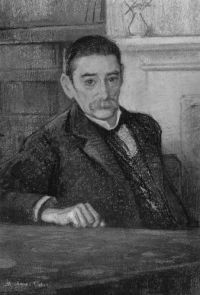
Portrait of W. G. Aston W. G. Aston Shinto: The ancient religion of Japan

But the latter would have none but his own, and demanded it so vehemently of Hohodemi as to grieve him bitterly. Hohodemi went down to the sea-shore and stood there lamenting, when there appeared to him the Old Man of the Sea, by whose advice he descended into the sea-depths to the abode of the god of the Sea, a stately palace with lofty towers and battlements. Before the gate there was a well, and over the well grew a thick-branching cassia tree into which Hohodemi climbed.
Source: Gutenberg

Portrait of W. G. Aston W. G. Aston Shinto: The ancient religion of Japan

We ought not, for example, to assume that ancestor-worship is necessarily divine worship. It may only mean acts indicating affection and reverence for the dead, common to ourselves with non-Christian peoples, and need not involve any superstitious belief in a supernatural power exercised by dead forefathers or heroes. In modern Japan, ancestor-worship is a comparatively rational cult, and it is surely undesirable that missionaries should create for themselves great and needless difficulties by condemning it indiscriminately.
Source: Gutenberg

Portrait of W. G. Aston W. G. Aston Shinto: The ancient religion of Japan

And when the so-called ancestors of the Japanese race are not actually Nature-gods, they are usually the satellites or children of Nature-gods. In imitation of the Mikados who selected the Sun-goddess as their ancestral deity, the hereditary corporations or clans by whom in ancient times the Government of Japan, central and local, was carried on, chose for themselves, or perhaps invented, nature-deities, or their children or ministers, as their patron-gods, to whom special worship was paid. From this to a belief in their descent from him as an ancestor, the transition was easy.
Source: Gutenberg

Get perspective with Kwize: daily news enlightened by great literature