Summary

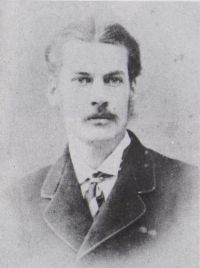
Portrait of Ernest Mason Satow Ernest Mason Satow Transactions of the Asiatic Society of Japan (1874)

Buddhism appeals to men’s religious susceptibilities, and has long been the popular faith, but Shintôism has nothing in it that comes down to men’s hearts, and it is futile to attempt to make it the substitute for that religion to which the people have been accustomed for ages, and which is intimately interwoven with the whole social fabric. The government tacitly confesses that Shintôism is a vapid lifeless thing when it sends men to preach throughout the country, and provides them with texts taken from no Japanese sacred-book but borrowed from Confucius and Mencius.
Source: Wikisource

Portrait of Ernest Mason Satow Ernest Mason Satow Transactions of the Asiatic Society of Japan (1874)

Amaterasu ô-mi-kami thought this all very strange, and having listened to the liberal praises bestowed on herself by Amé-no-ko-yané no mikoto said: “Men have frequently besought me of late, but never has anything so beautiful been said before.” Slightly opening the cavern door, she said from the inside: “I fancied that in consequence of my retirement both Ama-no-hara (heaven) and Ashi-wara no naka-tsu-kuni (Japan) were dark. Why has Amé-no-uzumé danced, and why do the gods all laugh?”
Source: Wikisource

Portrait of Ernest Mason Satow Ernest Mason Satow Transactions of the Asiatic Society of Japan (1874)

Certainly, if the men do now and then indulge in this pastime, the little boys cannot be said to abstain from it. Any one can convince himself of their ardent devotion to the sport by taking a walk through Yedo in the month of January. Yedo is called ‘a handsome city of park-like appearance, with a population of 1,500,000 inhabitants.’ Yedo can never have corresponded to such a description, even in its most flourishing days, and there is no reason to suppose that its population ever exceeded a million or twelve hundred thousand at the outside.
Source: Wikisource

Get perspective with Kwize: daily news enlightened by great literature