“ Every stone has its message for Japanese eyes, every tree its association with poetry or romance. Even among Western connoisseurs of Japanese wood engraving, its fifty-two resting places are as familiar as the Stations of the Cross. Such is the Tokaido, the road between the two capitals of Kyoto and Tokyo, still haunted by the ghosts of the Emperor's ox-drawn wagons, the Shoguns' lacquered palanquins, by feudal warriors in their death-like armour, and by the swinging strides of the samurai. ”
Tōkaidō
Definition and stakes
The theme of “Tōkaidō” has been addressed by authors such as J. M. W. Silver, Lucian Swift Kirtland, Captain F. Brinkley, John Paris and Thomas Stevens. It is often associated with terms like Tokyo, Japan, Kyoto, Edo and Tokugawa.
Quotes about “Tōkaidō”
Various, Encyclopaedia Britannica, 11th Edition…
“ Iyeyasu, the founder of the Tokugawa dynasty of shōguns, directed that his body should be interred at Nikkō, a place of exceptional beauty, consecrated eight hundred years previously. This meant an extension of the Tōkaidō (under a different name) nearly a hundred miles northward, for the magnificent shrines erected then at Nikkō and the periodical ceremonies thenceforth performed there demanded a correspondingly fine avenue of approach. The original Tōkaidō was taken for model, and Yedo and Nikkō were joined by a highway The Nakasendoō. ”
Thomas Stevens, Around the World on a Bicycle - Volume II
“ Through Ishibe and beyond, to where it crosses the Yokota-gawa, the Tokaido continues level and good. Near the crossing of this stream is a curious stone monument, displaying the carved figures of three monkeys covering up their eyes, mouth, and ears, to indicate that they will "neither see, hear, nor say any evil thing." All through here the country is devoted chiefly to growing tea; very pretty the undulating ridges and rolling slopes of the broken foot-hills look, set out in thick, bushy, well-defined rows and clumps of dark, shiny tea-plants. ”
Lucian Swift Kirtland, Samurai Trails: A Chronicle of Wanderings on the Japanese High Road
“ I do not believe that Japanese children like chocolate and there was more than a possibility that this highly condensed brand would make the baby ill. Surely the deposed gods of the ancient Tokaido must have made merry if the news of our analytics was carried to their Valhalla. Nevertheless our present, wrapped in a square of white paper according to the etiquette of gifts, was received by the family with as many protestations of appreciation as if we had handed them a deed to perpetual prosperity. ”
Captain F. Brinkley, Japan: Its History, Arts, and Literature (1902)
“ Fifty-three stations were established along the Tōkaidō between Yedo and Kyōtō, sixty-nine along the Nakasendo; and the journey by the former road occupied ten days, that by the latter twelve. The distance by the Tōkaidō being three hundred and thirty miles, it is seen that the rate of progress was thirty-three miles a day, and the average interval between the stations six and a quarter miles. It must be understood that this transport system was intended for the benefit of the samurai class only: if a commoner wanted horses or coolies, he had to hire them as best he could. ”
J. M. W. Silver, Sketches of Japanese Manners and Customs
“ It is true that the peremptory order, 'Chetanerio,' or 'Down upon your knees,' at the approach of one of their oligarchical rulers, would be objectionable to Europeans; but the Japanese are accustomed to this, and proceed with their journey after half-an-hour's detention without being in any way put out by it.The numerous and pleasant tea-houses that skirt the Tokaido have a great deal to do with rendering travelling popular, A smiling welcome from the pretty waitresses employed at these places may always be anticipated by the weary wayfarers ”
J. Morris, Makers of Japan (1906)
“ Late in 1869 the Emperor was joined at Tokio by the young Empress Haruko, who travelled overland by the highroad termed the Tokaido, with an immense retinue, resting on the way at the prescribed honjins or private hotels used by the feudal lords on their former journeys [35] to and from Yedo, when the Shoguns required them to pay periodical visits to the headquarters of the Tokugawa government. ”
 Arthur Davison Ficke,
Chats on Japanese Prints
Arthur Davison Ficke,
Chats on Japanese Prints
“ Shortly after 1830 Hiroshige found occasion to travel from Yedo, the northern capital, to Kyoto, the southern capital, along the great post-road which he has immortalized—the Tokaido. There resulted his series of horizontal plates, "The Fifty-three Stations of the Tokaido," completed about 1834. This remains his best-known and unsurpassed work. Plate 53 is from this series. Each picture records with unfailing vividness and originality some famous scene along the crowded national highway. ”
J. M. W. Silver, Sketches of Japanese Manners and Customs
“ But should anything excite the risible faculties of the observer, his hallucinations are likely to be quickly scattered by the scowls of the resolute-looking fellows passing by with 'hand on sword,' needing but little encouragement to 'set a glory' to it, 'by giving it the worship of revenge,' as they are extremely jealous of the honour of their prince, and regard the presence of foreigners on the tokaido at such times as an insult. ”
Lucian Swift Kirtland, Samurai Trails: A Chronicle of Wanderings on the Japanese High Road
“ This trail from Kofu on is rather closely followed by the railway just [275] as is the Tokaido in the South. I do not know whether it was in honour of (or in disgust at) all such modernities that feudal Yedo changed its name to Tokyo. The capital was our destination and we had intended keeping along the direct road but upon a whim (and a look at the map) we suddenly decided to climb the ridge between us and Fuji-san, and then to encircle the base of the sacred mountain until we should find again the Tokaido which we had forsaken at Nagoya. ”
J. M. W. Silver, Sketches of Japanese Manners and Customs
“ Along this beautiful road are constantly passing Daimios and their hosts of retainers, trains of travellers and pilgrims, and a large portion of the island traffic of the empire. As the Tokaido passes through most of the principal towns, the traveller has frequent opportunities of observing the various avocations of the people; for mechanics commonly work in front of their doors, as shown in the woodcut; and in fine weather, the sliding windows through which the Japanese enter their houses are always drawn back, leaving the interior and its occupants open to the road. ”
Henry M. Field, From Egypt to Japan
“ The next morning, as we started on our journey, we came upon the Tokaido, the royal road of Japan, built hundreds of years ago from Yedo to Kioto, to connect the political with the spiritual capital—the residence of the Tycoon with 407 that of the Mikado. It is the highway along which the daimios came in state to pay their homage to the Tycoon at Yedo, as of old subject-princes came to Rome. It is constructed with a good deal of skill in engineering, which is shown in carrying it over mountains, and in the building of bridges. ”
 Richard Hildreth,
Hildreth's "Japan as It Was and Is"…
Richard Hildreth,
Hildreth's "Japan as It Was and Is"…
“ Multitudes of beggars crowd the roads in all parts of the empire, but particularly on the so much frequented Tōkaidō, among them many lusty young fellows, who shave their heads. To this shaved begging tribe belongs a certain remarkable religious order of young girls, called Bikuni, which is as much as to say, nuns. They live under the protection of the nunneries at Kamakura and Miyako, to which they pay a certain sum a year, of what they get by begging, as an acknowledgment of their authority. ”
 George Trumbull Ladd,
Rare days in Japan
(1910)
George Trumbull Ladd,
Rare days in Japan
(1910)
“ But reminiscences derived from the history of the remoter and more recent past, added much to the sentiments belonging with propriety to this manner of journeying along the Tōkaidō. I was travelling along an important part of the highway over which, from the seventeenth century onwards, the Daimyos and their gorgeous retinues went to pay their respects and to acknowledge their allegiance to the Shōgun at Yedo. One could easily revive something of the picture which is described as follows by Black in his “Young Japan”: “But what a scene it used to present! [79] How crowded with pedestrians ”
Captain F. Brinkley, Japan: Its History, Arts, and Literature… (1902 and 1910)
“ Tōkaidō district, develops strength during feudal anarchy, ii. 30. Tokihira, Fujiwara chief, and Michizane, i. 179, 256. Tokiyori, Hōjō vicegerent, fiscal policy, ii. 121. Toku, imperial concubine, power, i. 259. Tokudaiji, noble family, hereditary privileges, iv. 5. Tokugawa epoch, character, i. 158, ii. 37, iv. 3. See also Government. Tokugawa family, branch of the Minamoto, administrative control, i. 158; divine ancestry, 159. See also Government (Tokugawa epoch) , Shōgun, Iyeyasu and other Shōguns by name. ”
 Alfred Parsons,
Notes in Japan
Alfred Parsons,
Notes in Japan
“ Fortunately they form a solid majority in every land, a mass not easily moved, and even in progressive Japan it will be a long time before ill-cut trousers and steam-ploughs re{198}place the kimono and the spade. The Tokaido Railway takes you in twelve hours from Hamamatsu to Kōbe, and while waiting till a new passport came from Tōkyō I had time to see a little more of the beautiful country around that hospitable port. ”
Jr. John Fox, Following the Sun-Flag: A Vain Pursuit Through Manchuria
“ From Takeuchi I have learned much about Japanese character, especially about the Buschido spirit—the fealty of Samurai to Daimio, of retainer to Samurai, of servant to master. It is useless to be harsh with or to scold a Japanese servant. Just make your appeal to that traditional spirit of loyalty and all will be better—if not well. He may rob you himself in the way of traditional commissions, but you can be sure that he will allow the same [pg 91] privilege to nobody else. But of Takeuchi—as of Fuji—more anon. ”
 Lafcadio Hearn,
The Romance of the Milky Way, and Other Studies & Stories
Lafcadio Hearn,
The Romance of the Milky Way, and Other Studies & Stories
“ The life of Tōkyō has been, to outward seeming, hardly more affected by the events of the war than the life of nature beyond it, where the flowers are blooming and the butterflies hovering as in other summers. ”
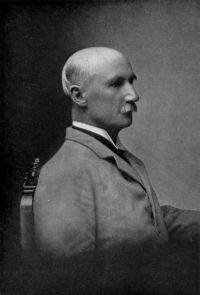 Francis Brinkley,
1911 Encyclopædia Britannica
(1911)
Francis Brinkley,
1911 Encyclopædia Britannica
(1911)
“ The Tokugawa era (1603–1867) , which popularized the drama, had other memorable effects upon Japanese literature. Yedo, the shōgun’s capital, displaced Kiōto as the centre of literary activity. Its population of more than a million, including all sorts and conditions of men—notably wealthy Literature of the Tokugawa Era. merchants and mechanics—constituted a new audience to which authors had to address themselves; and an unparalleled development of mental activity necessitated wholesale drafts upon the Chinese vocabulary. ”
 George M. Gould,
Concerning Lafcadio Hearn; With a Bibliography by Laura Stedman
George M. Gould,
Concerning Lafcadio Hearn; With a Bibliography by Laura Stedman
“ Hearing this awful command, the maiden only smiles the brave smile—inheritance of her Samurai blood. She knows what she must do.... Together she and her lover quietly meet the Tōkyō express. As its low roar draws nearer, they "wound their arms about each other, and lay down cheek to cheek, very softly and quietly, straight across the inside rail."We close the book with the memory of Yuko, heroic little Yuko, who, even as noble Asakachi, who had his beautiful wish to die for his country fulfilled, proves that the Japanese spirit of loyalty is far greater than our word implies. ”
Captain F. Brinkley, Japan: Its History, Arts, and Literature (1902)
“ Nothing is more remarkable in the history of the Tokugawa epoch than the absence of anything like organised rebellion for many generations. Nevertheless at an early period of the epoch there appeared upon the stage a turbulent figure which remained more or less in evidence until modern days. This was the rōnin, or "wave-man," an epithet applied to samurai who, believing themselves charged with a mission to mend the times, refrained from joining the service of any fief, and wandered about, ready to take a part in all adventures that showed a colouring of sentiment. ”
Osman Edwards, Japanese Plays and Playfellows (1901)
“ It might be supposed that the names of Iyeyasu and Hideyoshi have no more virtue as a rallying-cry for their descendants than the watchwords of Roundhead and Cavalier have for us. But such is not the case. Subtly reincarnate in the cities which they glorified in life, their spirits still give battle after death in the bloodless field of civic rivalry. Tōkyō is still Yedo, the Petersburg of the empire, created by a despot's will and the centre of law, of authority, of administration; but it is to Kyōto, as to Moscow, the holy city, that lovers of art and of religion are inevitably attracted. ”
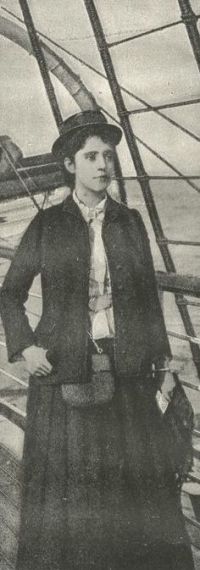 Elizabeth Bisland,
The Life and Letters of Lafcadio Hearn…
Elizabeth Bisland,
The Life and Letters of Lafcadio Hearn…
“ I went to Sakai, of course,—and bought a sword, and saw the grave of the eleven samurai of Tosa who had to commit seppuku for killing some foreigners,—and told them I wished they could come back again to kill a few more who are writing extraordinary lies about Japan at this present moment. I would rather live a month in Ōsaka than ten years free of rent in Tōkyō. ”
Helen Barrett Montgomery, The Empire of the East
“ The Tokugawa period, covering the 270 years during which the Government of the Tycoon was installed in Yeddo, was one during which literature made great progress in Japan. Those years were a time of profound peace; the country was cut off from the rest of the world, thrown in upon itself, and accordingly had ample leisure, and possibly much inclination, to develop its artistic side, especially in literature. ”
“ In a.d. 1256 Tokiyori, then only thirty years old, resigned the regency in favor of his son Tokimune, who was only six years. He himself retired to a monastery, from which he travelled as a visiting monk throughout the country. In the meantime his son was under the care of a tutor, Nagatoki, who, of course, was one of the Hōjō family. Thus it had come about that a tutor now controlled the regent; who was supposed to control the shōgun; who was supposed to be the vassal of the emperor; who in turn was generally a child under the control of a corrupt and venal court. ”
Captain F. Brinkley, Japan: Its History, Arts, and Literature (1902 and 1910)
“ In nothing is Tōkyō more recklessly extravagant than in the sums it lavishes for its daughters' adornment on these grand occasions. A tradesman does not exceed the sanction of custom when he spends a tenth part of his annual income on the dress of one little daughter. The Sano festival inspires similar but less costly effort, for the deities' outing lasts only one day, whereas in the Kanda parish the sacred palanquins and the dashi are three days en route. ”
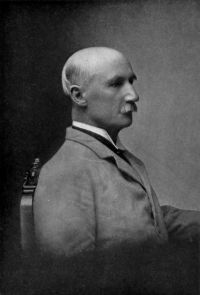 F. Brinkley,
A history of the Japanese people
F. Brinkley,
A history of the Japanese people
“ It is necessary to note here that, although the feudatories have been frequently referred to in these pages as prominent figures in this or that public drama, the feudal chiefs themselves exercised, in Tokugawa days, very little influence on the current of events. A modern historian speaks justly when he says:"In this respect the descendants of the great Tokugawa statesman found themselves reduced to a position precisely analogous to that of the emperor in Kyoto. Sovereign and shogun were alike mere abstractions so far as the practical work of the government was concerned. ”
 Yone Noguchi,
Through the Torii
(1922)
Yone Noguchi,
Through the Torii
(1922)
“ This Tokyo was at the first the town of samurai of two swords, of mind more bent on learning how to die than how to live, proper to say, founded by Iyeyasu Tokugawa, the mighty prince of the Tokugawa feudalism, four hundred year ago, whose want of artistic education made it quite natural for him not to see the poetical side of city-building; he allowed every whim and imagination of the people to take their own free course. ”
Elizabeth Bisland,
The Life and Letters of Lafcadio Hearn…
“ Tōkyō takes out of me all power to hope for a great Japanese future. You know how easily a society in such a state can be manipulated by shrewd foreign influence. The race must give evidence of some tremendous self-purifying and self-solidifying power, before my hopes can be restored to their former rainbow hues. ”
Gardner C. Teall, The Pleasures of Collecting
“ Fifty-eight years ago a noted Japanese official sought in vain throughout Yedo—now Tōkyō—for a countryman who might prove to be conversant with the English language, a fact that gives one an intimation of the rapidity with which the old order of things has been thrown off and the new taken on. ”
1911 Encyclopædia Britannica, Volume 15… (1911)
“ For the Tokugawa’s foreign policy was largely swayed by an apprehension lest the Kiūshiū feudatories, over whom the authority of Yedo had never been fully established, might, by the presence of foreign traders, come into possession of such a fleet and such an armament as would ultimately enable them to wrest the administration of the empire from Tokugawa hands. Hence the precaution of confining the English and the Dutch to Hirado, the fief of a daimyō too petty to become formidable, and to Nagasaki which was an imperial city. ”
