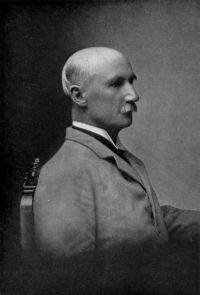
Francis Brinkley

Francis Brinkley

Summary

Portrait of Francis Brinkley Francis Brinkley 1911 Encyclopædia Britannica (1911)

These Chinese scholars made no secret of their contempt for Buddhism, and in their turn they were held in aversion by the Buddhists and the Japanese scholars (wagakusha) , so that the second half of the 18th century was a time of perpetual wrangling and controversy. The worshippers at the shrine of Chinese philosophy evoked a reactionary spirit of nationalism, just as the excessive worship of Occidental civilization was destined to do in the 19th century.
Source: Wikisource

Portrait of Francis Brinkley Francis Brinkley 1911 Encyclopædia Britannica (1911)

Her language is graceful and natural, her sentiments are refined and sober; and, as Mr Aston well says, her “story flows on easily from one scene of real life to another, giving us a varied and minutely detailed picture of life and society in Kiōto, such as we possess for no other country at the same period.”
Source: Wikisource

Portrait of Francis Brinkley Francis Brinkley 1911 Encyclopædia Britannica (1911)

To this day the spoken language of Japanese women is appreciably simpler and softer than that of the men, and to this day while the educated woman uses the hiragana syllabary in writing, eschews Chinese words and rarely pens an ideograph, the educated man employs the ideograph entirely, and translates his thoughts as far as possible into the mispronounced Chinese words without recourse to which it would be impossible for him to discuss any scientific subject, or even to refer to the details of his daily business.
Source: Wikisource

Get perspective with Kwize: daily news enlightened by great literature