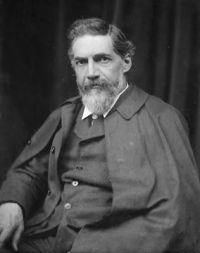
W. M. Flinders Petrie

W. M. Flinders Petrie

Summary

Portrait of W. M. Flinders Petrie W. M. Flinders Petrie Egyptian decorative art (1895)

The vulture alone as the emblem of protection is frequently figured with outstretched wings across the ceilings of the passages, particularly those of the royal tombs of the XIXth dynasty. There is perhaps no sight in the animal world more imposing than one of these birds, stretched out with a span of some nine or ten feet, hanging in the air close overhead; it is natural that it should have excited the admiration of man, and not being hurtful it readily came to be honoured as a type of maternal care.
Source: Gutenberg

Portrait of W. M. Flinders Petrie W. M. Flinders Petrie Egyptian decorative art (1895)

The spiral, or scroll, is one of the greatest elements of Egyptian decoration; it is only second to the lotus in importance, and shares with that the origination of a great part of the ornament of the world. The source of the spiral and its meaning are alike uncertain. It has been attributed to a development of the lotus pattern; but it is known in every variety of treatment without any trace of connection with the lotus. It has been said to represent the wanderings of the soul
Source: Gutenberg

Portrait of W. M. Flinders Petrie W. M. Flinders Petrie Egyptian decorative art (1895)

In other directions we see the same ability. In the adaptation of the scenes of peace or of war to the gigantic wall surfaces of the pylons and temples; in the grand situations chosen for the buildings, from the platform of cliffs for the pyramids at Gizeh, to the graceful island of Philæ; in the profusion of ornament on the small objects of daily life, which yet never appear inappropriate until a debased period;—in all these different manners the Egyptian showed a 5variety of capacity in design and decoration which has not been exceeded by any other people.
Source: Gutenberg

Get perspective with Kwize: daily news enlightened by great literature