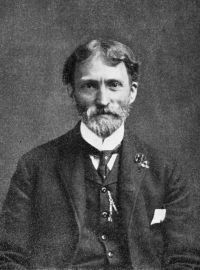
Walter Hough

Walter Hough

Summary

Portrait of Walter Hough Walter Hough,  The Moki snake dance (1900)

“ There is no need for songs of the day; love songs, lullabys, war songs, hunting songs, songs secular and religious give variety in plenty. The dark side exists, to be sure, but the Mokis are so like children that a smile lurks just behind a sorrow. The seriousness and gravity with which the ceremonials are conducted is very impressive, and no one who has seen the Snake dance will fail to note that the Moki can be grave at times. Telling stories is one of the amusements of winter around the fireside. ”
Source: Wikisource

Portrait of Walter Hough Walter Hough,  The Moki snake dance (1900)

“ All faces are turned in one direction; the gray light becomes many-hued before the near approach of the sun. A murmur passes through the crowd, in the distance a number of dark forms are seen running toward the mesa; nearer they come, pursued by boys and girls with wands of cornstalk, and run up the tortuous trail as though on level ground. As the sun appears above the eastern horizon the winner passes over the roof of the Snake kiva and the day of the Snake dance has begun with the Snake race. ”
Source: Wikisource

Portrait of Walter Hough Walter Hough,  The Moki snake dance (1900)

“ At Wolpi, the top of the mushroom-shaped rock is a favorite seat. The crowd is hardly less interesting than the dancers. Everyone, except the white visitor, is in gala costume, Moki and Navajo vying in gaudy colors. The Moki maidens have their hair done up in great whorls of shining blackness at the sides of their heads. The women, who have brushed away the evidences of preparation for the feast to follow the dance, now appear at their best, and the children dash around, consuming unlimited slices of watermelon. ”
Source: Wikisource

Get perspective with Kwize: daily news enlightened by great literature