Summary

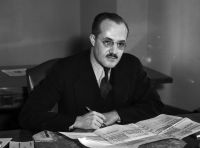
Portrait of Willard Huntington Wright Willard Huntington Wright Misinforming a Nation — Chapter V: British Painting (1917)

Not only is the Encyclopædia not comprehensive and up-to-date, but the manner in which British art and artists are constantly forced to the front rank is so grossly biased that a false impression of æsthetic history and art values is almost an inevitable result, unless one is already equipped with a wide understanding of the subject. If one were to form an opinion of art on the Britannica's articles, the opinion would be that English painting leads the modern world in both amount and quality.
Source: Wikisource

Portrait of Willard Huntington Wright Willard Huntington Wright Misinforming a Nation — Chapter V: British Painting (1917)

But even with this eulogy the Encyclopædia's critic does not rest content. As a humorist and a satirist upon canvas, “he has never been equalled.” If we regard Hogarth as an “author” rather than artist, “his place is with the great masters of literature — with the Thackerays and Fieldings, the Cervantes and Molieres.” (Note that of these four “great masters” two are English.)
Mastery in one form or another, if the Britannica is to be believed, was common among English painters.
Source: Wikisource

Portrait of Willard Huntington Wright Willard Huntington Wright Misinforming a Nation — Chapter V: British Painting (1917)

What sort of an idea of the relative values in art will the uninformed person get from such loose and ill-considered rhetoric, especially when the critic goes on to say that Master Baby is “a masterpiece of design, color and broad execution”? There is much more eulogy of a similar careless variety, but enough has been quoted here to show that the world must entirely revise its opinions of art if the Encyclopædia Britannica's statements are to be accepted.
Source: Wikisource

Get perspective with Kwize: daily news enlightened by great literature