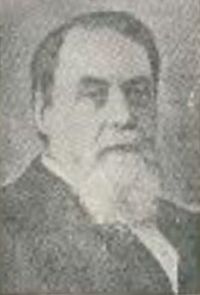
William Francis Channing

William Francis Channing

Summary

Portrait of William Francis Channing William Francis Channing,  Popular Science Monthly (1876)

“ THE problem of homes for the people is not a simple one. The question is not merely how to house single families at the least cost. No solution of the problem can be worse than the solitary farm-house in a thinly-settled country. The real question is, how to reconcile the autonomy of the individual and family with the economies and productive forces of modern society. The solitary farm-house is a pioneer in the wilderness, and good for that. But the first generation born in it, or as soon as civilization has spread far enough to take it in, fly from it as if it were a pest-house. ”
Source: Wikisource

Portrait of William Francis Channing William Francis Channing,  Popular Science Monthly (1876)

“ I began this presentation of the "People's Palace" with the demand for an architecture and structural law which should throw around each individual and family a fortress of privacy, and which should secure a home-sphere more inviolable than is possible in our isolated houses, invaded daily by a horde of carriers, and pervaded by an alien caste of servants. This largest freedom and independence of the individual and family can only be assured by the perfect organization of the Homestead and Household. ”
Source: Wikisource

Portrait of William Francis Channing William Francis Channing,  Popular Science Monthly (1876)

“ There are two extremes of reaction against existing society: one, Communism, its destructive fusion; the other, Individual Sovereignty, its destructive analysis. Each tends to social dissolution, because it rejects one of the organic factors. Between these extremes—occupying the domain of organization—are two possible social orders, one constructive, attractive in all its forces, cooperative, in harmony with modern thought, and with the development of science and the arts. ”
Source: Wikisource

Get perspective with Kwize: daily news enlightened by great literature