Summary

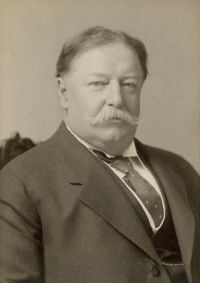
Portrait of William Howard Taft William Howard Taft Wisconsin v. Illinois — Opinion of the Court

Whatever may be said as to the service of the diverted water in relation to a waterway to the Mississippi, or as to the possible benefit of its contribution to the navigation of that river at low water stages, it remains true that the disposition of Chicago's sewage has been the dominant factor in the promotion, maintenance and development of the enterprise by the state of Illinois and the Sanitary District. The purpose of utilizing the flow through the drainage canal to develop power is also undoubtedly present, although subordinated to the exigency of sanitation.
Source: Wikisource

Portrait of William Howard Taft William Howard Taft Wisconsin v. Illinois — Opinion of the Court

The exact issue is whether the state of Illinois and the Sanitary District of Chicago by diverting 8,500 cubic feet from the waters of Lake Michigan have so injured the riparian and other rights of the complainant states bordering the Great Lakes and connecting streams by lowering their levels as to justify an injunction to stop this diversion and thus restore the normal levels. Defendants assert that such a diversion is the result of congressional action in the regulation of interstate commerce, that the injury, if any, resulting is damnum absque injuria to the complaining states.
Source: Wikisource

Portrait of William Howard Taft William Howard Taft Wisconsin v. Illinois — Opinion of the Court

The true intent of the act of Congress was that unreasonable obstructions to navigation and navigable capacity were to be prohibited, and, in the cases described in the second and third clauses of section 10, the Secretary of War, acting on the recommendation of the Chief of Engineers, was authorized to determine what in the particular cases constituted an unreasonable obstruction.
This construction of section 10 is sustained by the uniform practice of the War Department for nearly 30 years. Nothing is more convincing in interpretation of a doubtful or ambiguous statute.
Source: Wikisource

Get perspective with Kwize: daily news enlightened by great literature