Summary

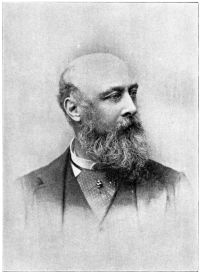
Portrait of William Miles Maskell William Miles Maskell An Account of the Insects Noxious to Agriculture and Plants in New Zealand

Icerya is exceptional, being omnivorous, feeding equally on bark or leaves, deciduous or evergreen plants; it belongs to every class except (f) . Every method of destruction has therefore to be resorted to against it.
The treatment of a deciduous plant infested by Coccids is simple as to its method. For two reasons the dead winter-time must be chosen for it—first, because, the leaves being off, the whole plant can be easily got at; secondly, because the eggs of the insect have not yet been hatched, and the whole brood can be destroyed at once.
Source: Gutenberg

Portrait of William Miles Maskell William Miles Maskell An Account of the Insects Noxious to Agriculture and Plants in New Zealand

To institute a comparison, it would be manifestly absurd to include such countries as England, or Germany, or, on the other hand, India, or Central America, or North Australia—Firstly, because in the greater part, or at least in the northern parts, of Europe the winters are much more severe than in New Zealand, and almost certainly the great cold is injurious to such insects as Coccids. Secondly, because in tropical countries it seems that the too great heat is equally obnoxious to them; and, with the exception of a few species, tropical Coccids are comparatively harmless.
Source: Gutenberg

Portrait of William Miles Maskell William Miles Maskell An Account of the Insects Noxious to Agriculture and Plants in New Zealand

Once this last stage of her existence entered upon, the female prepares for laying her eggs. In most species the services of a male are needed; in some, as far as can be made out after investigation of many years, no males are found. The female, if naked, either hatches her eggs in her own body or lays them on the plant; if covered, she fills her shield with the eggs. The naked insects often cover the eggs themselves—e.g., Lecanium hemisphæricum; or, again, deposit them in an ovisac, a mass of cottony secretion—e.g., Pulvinaria camellicola or Icerya purchasi.
Source: Gutenberg

Get perspective with Kwize: daily news enlightened by great literature