Summary

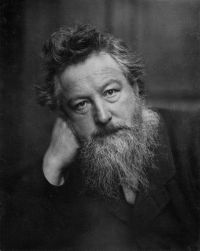
Portrait of William Morris William Morris News from Nowhere — Chapter XXVII: THE UPPER WATERS (1890)

Clara broke in here, flushing a little as she spoke: "Was not their mistake once more bred of the life of slavery that they had been living?—a life which was always looking upon everything, except mankind, animate and inanimate—'nature,' as people used to call it—as one thing, and mankind as another, it was natural to people thinking in this way, that they should try to make 'nature' their slave, since they thought 'nature' was something outside them."
Source: Wikisource

Portrait of William Morris William Morris News from Nowhere — Chapter XXVII: THE UPPER WATERS (1890)

But now, you see," said he, leading me on a little, "we have learned the trick of handicraft, and have added the utmost refinement of workmanship to the freedom of fancy and imagination."
I looked, and wondered indeed at the deftness and abundance of beauty of the work of men who had at last learned to accept life itself as a pleasure, and the satisfaction of the common needs of mankind and the preparation for them, as work fit for the best of the race.
Source: Wikisource

Portrait of William Morris William Morris News from Nowhere — Chapter XXVII: THE UPPER WATERS (1890)

Dick looked thoughtful, and said:
"Strange, neighbour? Well, I don't know. I have often heard my old kinsman say the one aim of all people before our time was to avoid work, or at least they thought it was; so of course the work which their daily life forced them to do, seemed more like work than that which they seemed to choose for themselves."
"True enough," said Morsom. "Anyhow, they soon began to find out their mistake, and that only slaves and slave-holders could live solely by setting machines going."
Source: Wikisource

Get perspective with Kwize: daily news enlightened by great literature