Summary

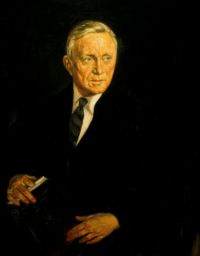
Portrait of William O. Douglas William O. Douglas Cramer v. United States — Dissent

Certainly a person who takes the stand in defense of a treason charge against him will not be presumed to commit perjury when he makes admissions against self-interest. Admissions against self-interest have indeed always been considered as the highest character of evidence. When two witnesses testify to the overt acts, why then are not admissions of the accused in open court adequate to establish their true character? Could the testimony of any number of witnesses more certainly or conclusively establish the significance of what was done?
Source: Wikisource

Portrait of William O. Douglas William O. Douglas Cramer v. United States — Dissent

It is plain from those materials that the requirement of an overt act is designed to preclude punishment for treasonable plans or schemes or hopes which have never moved out of the realm of thought or speech. It is made a necessary ingredient of the crime to foreclose prosecutions for constructive treason. The treasonable project is complete as a crime only when the traitorous intent has ripened into a physical and observable act. The act standing alone may appear to be innocent or indifferent, such as joining a person at a table, stepping into a boat, or carrying a parcel of food.
Source: Wikisource

Get perspective with Kwize: daily news enlightened by great literature