Summary

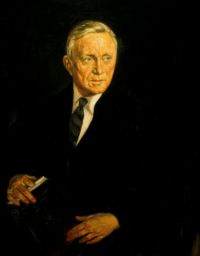
Portrait of William O. Douglas William O. Douglas Osborn v. United States (385 U.S. 323…

If a man's privacy can be invaded at will, who can say he is free? If his every word is taken down and evaluated, or if he is afraid every word may be, who can say he enjoys freedom of speech? If his every association is known and recorded, if the conversations with his associates are purloined, who can say he enjoys freedom of association? When such conditions obtain, our citizens will be afraid to utter any but the safest and most orthodox thoughts; afraid to associate with any but the most acceptable people. Freedom as the Constitution envisages it will have vanished.
Source: Wikisource

Portrait of William O. Douglas William O. Douglas Osborn v. United States (385 U.S. 323…

The time may come when no one can be sure whether his words are being recorded for use at some future time; when everyone will fear that his most secret thoughts are no longer his own, but belong to the Government; when the most confidential and intimate conversations are always open to eager, prying ears. When that time comes, privacy, and with it liberty, will be gone.
Source: Wikisource

Portrait of William O. Douglas William O. Douglas Osborn v. United States (385 U.S. 323…

Where, as here, there is enough evidence to get a warrant to make a search I would not allow the Fourth Amendment to be short-circuited.
We downgrade the Fourth Amendment when we forgive noncompliance with its mandate and allow these easier methods of the police to thrive.
A householder who admits a government agent, knowing that he is such, waives of course any right of privacy. One who invites or admits an old 'friend' takes, I think, the risk that the 'friend' will tattle and disclose confidences or that the Government will wheedle them out of him.
Source: Wikisource

Get perspective with Kwize: daily news enlightened by great literature